If you want to take your Shopify store to the next level, email marketing is one of the smartest places to start. It remains one of the most cost-effective ways to lift conversion rates, grow sales and turn one-time buyers into loyal repeat customers. The hard part is choosing a platform, because there are dozens of them. To make the decision easier, we tested the most popular and capable email marketing services for Shopify in 2026 and narrowed the field to five clear standouts.
1. Top Email App for Shopify: GetResponse
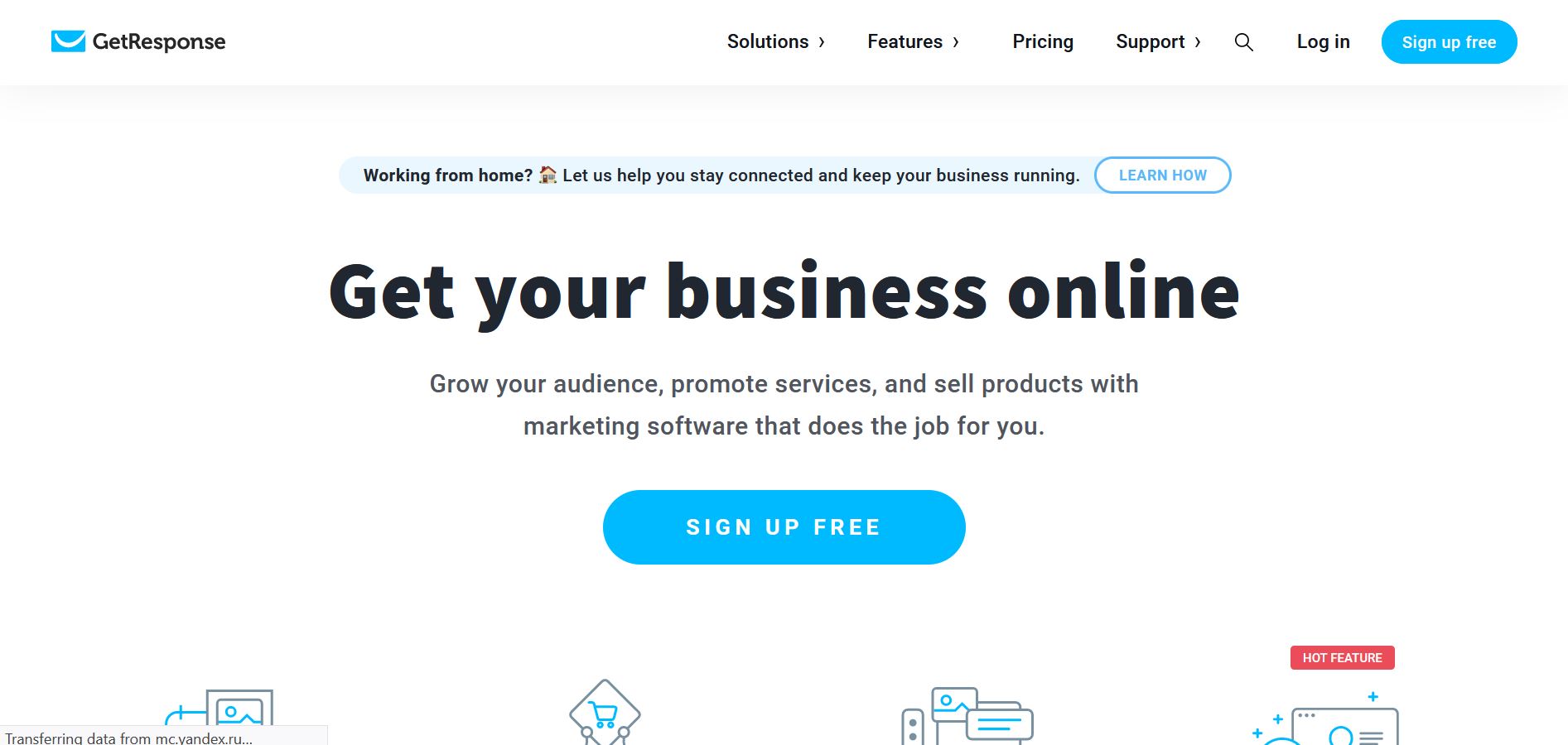
GetResponse is a genuine powerhouse because it does far more than run email campaigns. It bundles in tools for building landing pages, hosting webinars and managing your contact data, making it closer to a complete marketing suite than a simple newsletter tool.
GetResponse also offers deep-data integration with Shopify, so you can sync and analyse customer, product and order data, then segment and tag contacts to power automated campaigns.
Why we chose it
GetResponse gives businesses of every size a set of tools that are simple to use yet easy to scale up, down or customise. Its tagging and tracking system surfaces customer behaviour and triggers actions in real time, tying your CRM and email marketing together into one connected system.
Key features
- A/B testing across automation, landing pages and emails
- Drip campaigns
- Event-triggered actions
- Dynamic email content
- Reporting and analytics
- Segmentation, tagging and website-visitor tracking
Pricing
Paid plans scale with your subscriber count, with entry-level tiers starting affordably and rising as your list grows into the thousands and tens of thousands. Check the current rates before you sign up, as pricing is periodically refreshed.
Who we'd recommend it to
GetResponse suits larger stores that will get the most from its segmentation, advanced automation and CRM. It is also a strong pick for shop owners who run webinars or want to build several different landing pages.
Pros
- Very easy to set up
- Strong customer service
- Good value once you have a large contact list
- Emails look polished even on mobile
- Plenty of features for sophisticated campaigns
Cons
- Imports from other platforms occasionally fail
- No permanently free plan
- No export of campaign data to Excel
2. Best for Advanced Automation: ActiveCampaign
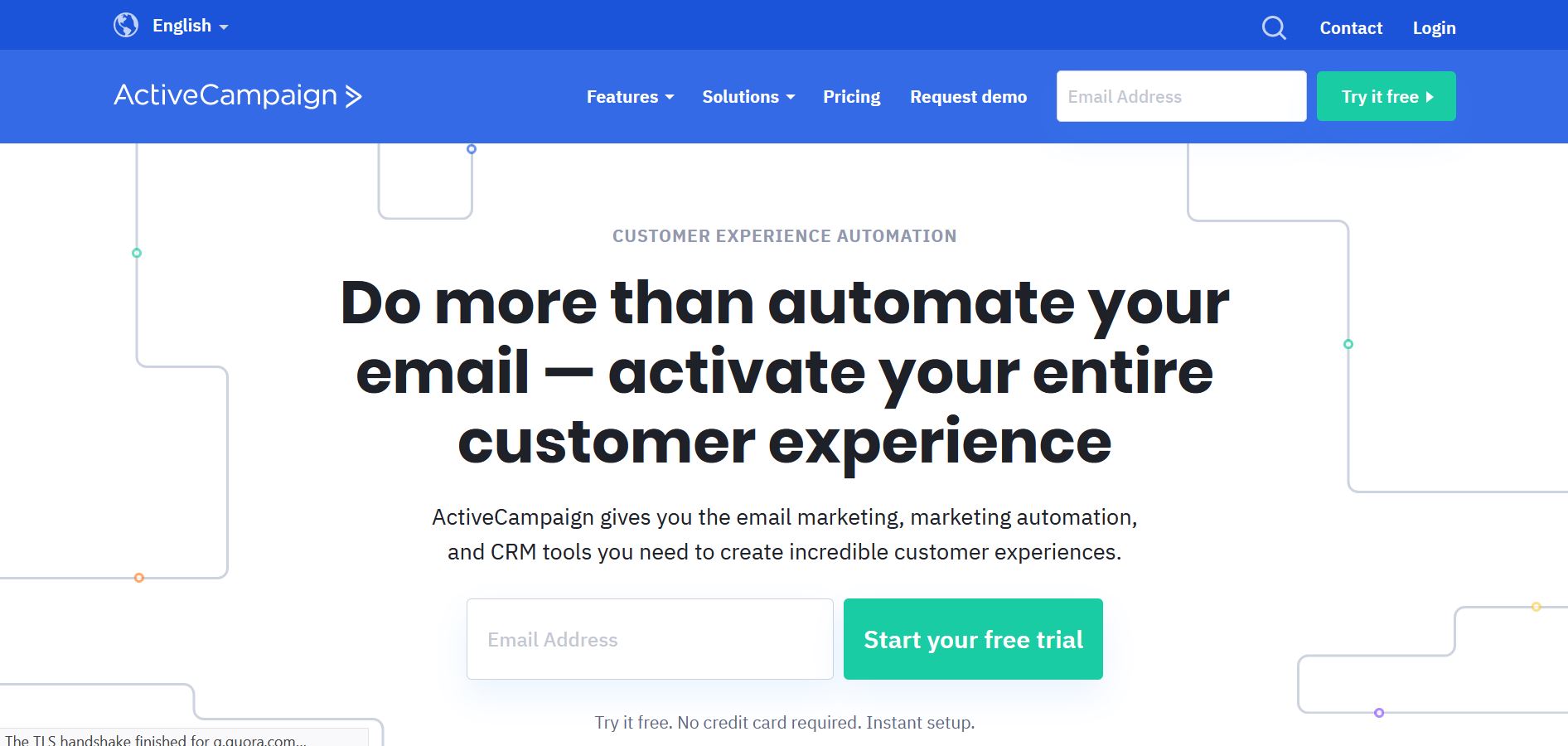
ActiveCampaign is another heavyweight, and it now integrates with Shopify with little effort. Because that integration runs deep, shop owners get access to the full toolkit: conditional email content, dynamic tagging and segmentation, the built-in CRM and genuinely advanced automation.
Why we chose it
Getting deep-data integration working is straightforward even if you have never set up anything similar. It captures contact details from customers who complete purchases and those who abandon their carts, adding them to your list automatically and making lead capture effortless. A favourite touch is that ActiveCampaign can also record how much each customer spends, which makes segmentation far more precise.
Its workflow-based automation editor makes it easy to build campaigns, send upsell emails and nudge customers toward a repeat purchase after a set period.
Key features
- Marketing automation
- Drag-and-drop email builder
- Built-in integrations with hundreds of tools
- CRM and sales automation
- Segmentation and custom targeting
- Conditional and dynamic email content
Pricing
ActiveCampaign prices its plans by contact volume and feature tier, starting modestly and increasing as your sending needs grow. It sits at the premium end of the market, so review the current tiers to match a plan to your list size.
Who we'd recommend it to
ActiveCampaign works best for larger stores that will use its automation and reporting to run hands-off campaigns and build a granular view of every customer. If you rely heavily on repeat buyers, its CRM is especially powerful.
Pros
- Sends conditional emails with offers and products tuned to each contact's interests
- Easy-to-use interface
- Every campaign is highly customisable
- Integrates with hundreds of other services
- Works with Gmail and other providers, not just a business address
Cons
- Reporting can feel thin at times
- The depth of features can overwhelm beginners
- The mobile interface is a little limited
3. Best for Beginners on a Budget: MailerLite
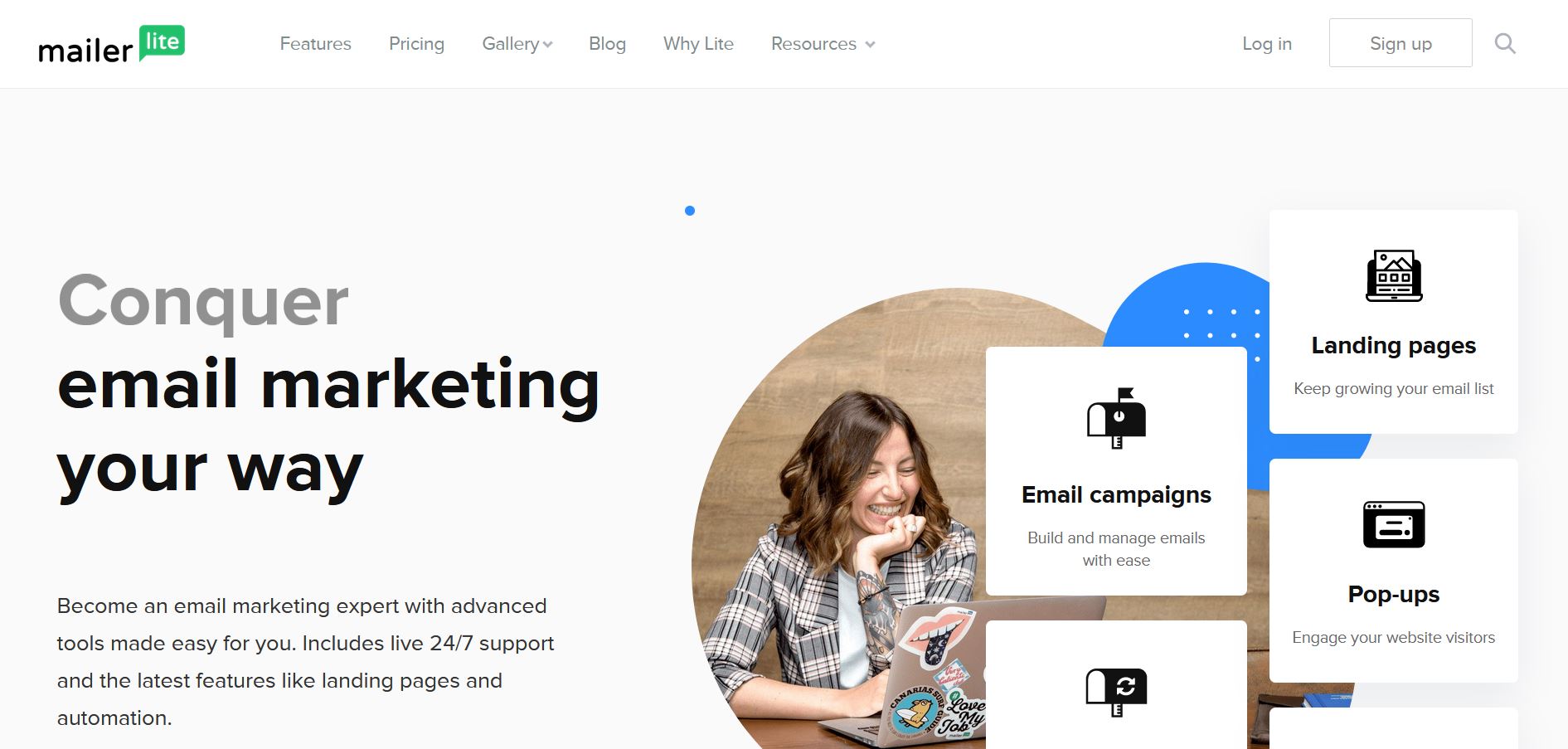
MailerLite is one of the best email marketing services for beginners and small businesses. It is remarkably easy to use yet still packed with capable features, including landing pages, surveys, marketing automation and dynamic email content. It also integrates tightly with Shopify, syncing products and customer data and triggering automations automatically.
Why we chose it
MailerLite segments your customers automatically the moment you import them from Shopify, so you have usable lists from the first minute. You can add pop-ups to your store and drop products from your catalogue straight into your emails. Deliverability is excellent — among the best of any platform we tested — and there is a generous free plan that covers a solid starter list of contacts.
Key features
- A/B split testing for emails and landing pages
- Automatic customer segmentation
- Landing page, form and mini-site builders
- Email marketing and automation
- A free plan for smaller lists
Pricing
MailerLite is one of the more affordable options, with a free tier for smaller lists and low-cost paid plans that scale as your subscriber count grows. Confirm the current thresholds when you sign up.
Who we'd recommend it to
MailerLite is ideal for shop owners who want a capable email tool without a big budget. It lacks some of the deepest automation of pricier rivals, but it covers everything most stores need — and beginners love how approachable it is.
Pros
- Very affordable
- Strong website and landing-page builders
- Clean, intuitive interface
- Simple email editor with plenty of functionality
Cons
- No social media integration
- MailerLite branding appears on emails sent from the free plan
4. Best for SMS and Multichannel: Brevo (formerly Sendinblue)
Brevo, the platform previously known as Sendinblue, is a great fit for Shopify owners on a limited budget. Despite its low cost, it offers a rich feature set: landing pages, Facebook Ads, live chat, email automation and lead scoring.
Why we chose it
Brevo lets you send conditional email content based on each customer's attributes — for example, showing different messages to existing customers than to prospects who have yet to buy.
Brevo also includes SMS. Alongside email, you can text order confirmations, shipping updates and order summaries. Order data syncs directly from Shopify, so building automations and segments is quick.
Key features
- Conditional email content
- Landing pages
- Customer segmentation
- SMS integration
- Facebook Ads creation
- Live chat
Pricing
Brevo prices by email volume rather than contact count, with a free tier that includes a daily sending cap and affordable paid plans as your volume rises. Check the current limits before committing.
Who we'd recommend it to
Its low-cost plans make Brevo ideal for shop owners on a tight budget, and it is especially useful for stores in regions where SMS is a primary channel of communication.
Pros
- Very affordable
- Many features usually reserved for pricier platforms
- Quick to set up and configure
- Solid A/B testing
- Built-in Facebook Ads creation
Cons
- Customer service can be hit or miss
- The interface is occasionally slow
5. Best Established Name: Constant Contact
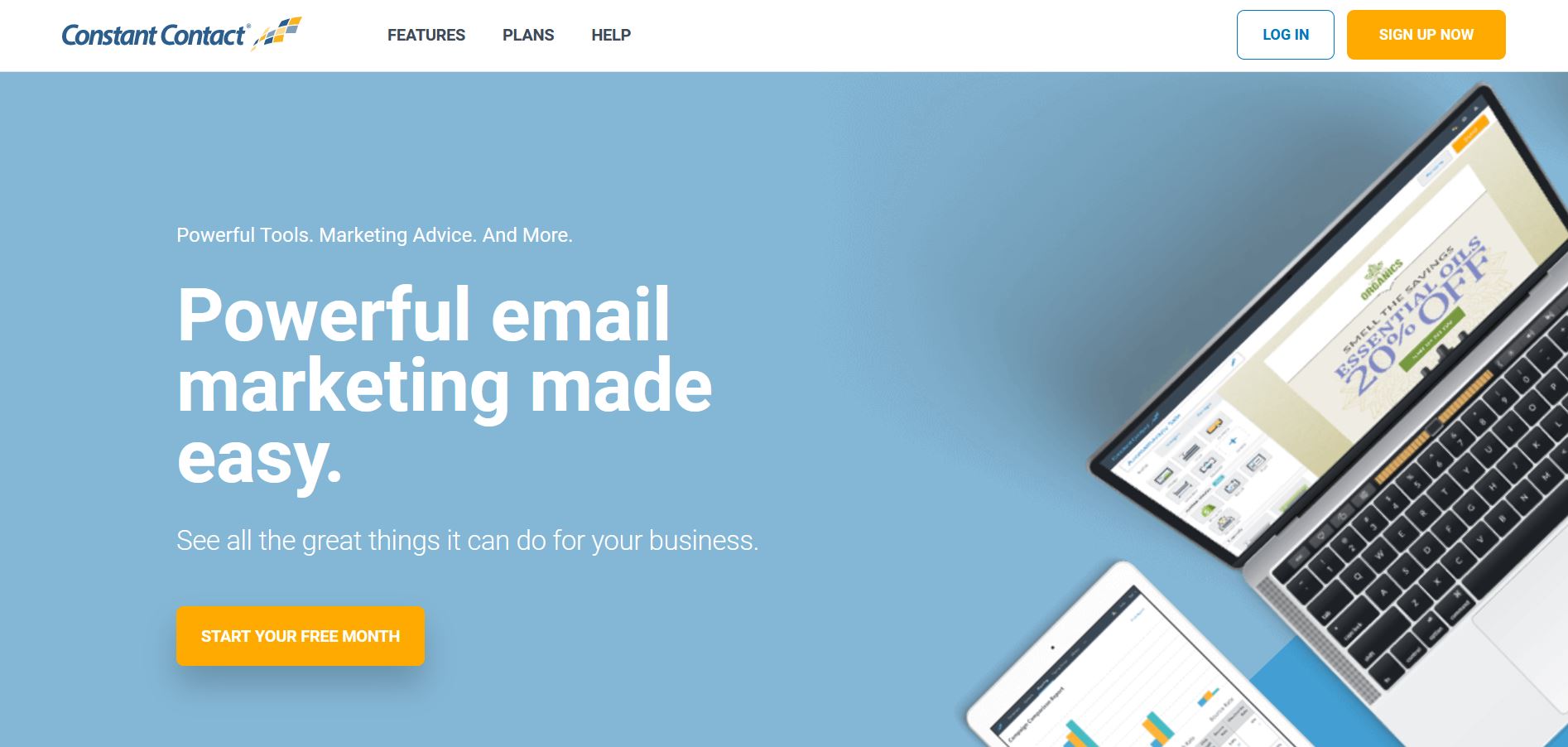
Constant Contact is one of the oldest and best-known names in email marketing. It integrates directly with Shopify and offers standout extras such as social media campaigns and surveys, plus real-time tracking that shows who is opening, clicking and sharing your emails.
Why we chose it
Constant Contact keeps things beginner-friendly with dynamic segments for different customer types, and its editor can pull products from Shopify into your emails automatically. It also earns a place on our list of the top MailChimp alternatives.
Key features
- Drip campaigns
- WYSIWYG email editor
- Analytics and reports
- Segmentation and tagging
- Social media marketing tools
- Dynamic emails with customer tagging
Pricing
Constant Contact prices by contact count and sits toward the higher end of the market, so weigh its cost against your list size and the features you will actually use.
Who we'd recommend it to
Constant Contact is a good fit for smaller shops that want a genuinely easy-to-use tool. Beyond that it is a harder sell, given its price and the removal of some services — event management, ticket sales and registrations — that once helped justify it.
Pros
- Mobile-responsive emails
- Customisable templates to get you started
Cons
- Expensive for the number of contacts you get
To learn more about us, visit our about page.