If you have landed here, chances are you are hunting for a Mailchimp alternative that pairs powerful features with a clean interface, sensible pricing, and room to grow without your bill spiralling out of control.
Mailchimp is still widely treated as the default email marketing platform, but it is also one of the tools that becomes noticeably painful (and expensive) the moment you try to scale. Below are six alternatives worth serious consideration in 2026, each with its own strengths depending on your budget and goals.
1. Mailchimp Alternative – Sendinblue (now Brevo)
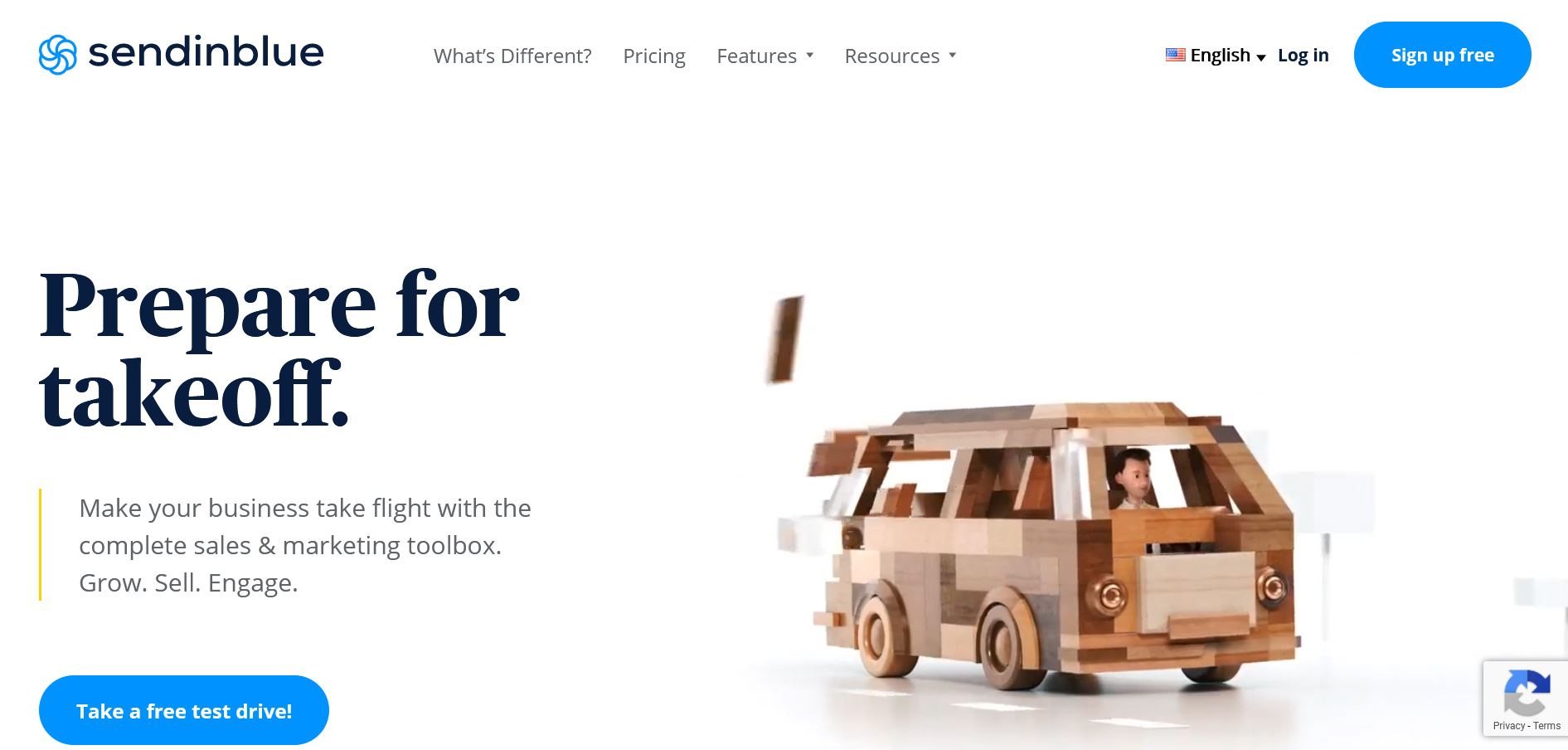
- Customisable sign-up forms
- Telephone customer support
- E-commerce plugins
- Real-time statistics
- A/B testing
- Free plan available
Sendinblue (rebranded as Brevo in recent years) is far more than a simple autoresponder. It spans nearly every corner of digital marketing, from SMS and email campaigns through to automation, social ads, and CRM. Its long-standing motto, "Grow. Sell. Engage," is a fair summary of what it sets out to do.
Like Mailchimp, it offers a free plan that unlocks most core features. The main catch is a daily sending cap on that free tier, which can be limiting if you send in high volume. Beyond that, you get generous contact storage, transactional email, and a sales CRM in one place.
You also get real-time analytics, SMS personalisation, and flexible segmentation. Combine the strong SMS options with a straightforward interface and Sendinblue makes a compelling case as a Mailchimp replacement.
Features
Sendinblue packs in tools designed to help businesses grow quickly: SMS marketing, live chat, and a mature email marketing suite. Its segmentation and template library let you tailor each message to exactly the audience you are targeting, including transactional emails.
Pricing
There is a free tier that covers most features, which is ideal for small businesses testing the waters. Paid plans start at affordable entry-level pricing and scale with your sending volume, and a pay-as-you-go option makes it friendly for the budget-conscious.
Pros
- Built-in autoresponders
- CRM functionality
- Easy to set up
- Support for additional languages
- Drag-and-drop interface
Cons
- Templates are not as polished as some rivals
- Real-time reporting lacks location and device data
- Automation features can feel limited on lower tiers
2. Mailchimp Alternative – Moosend
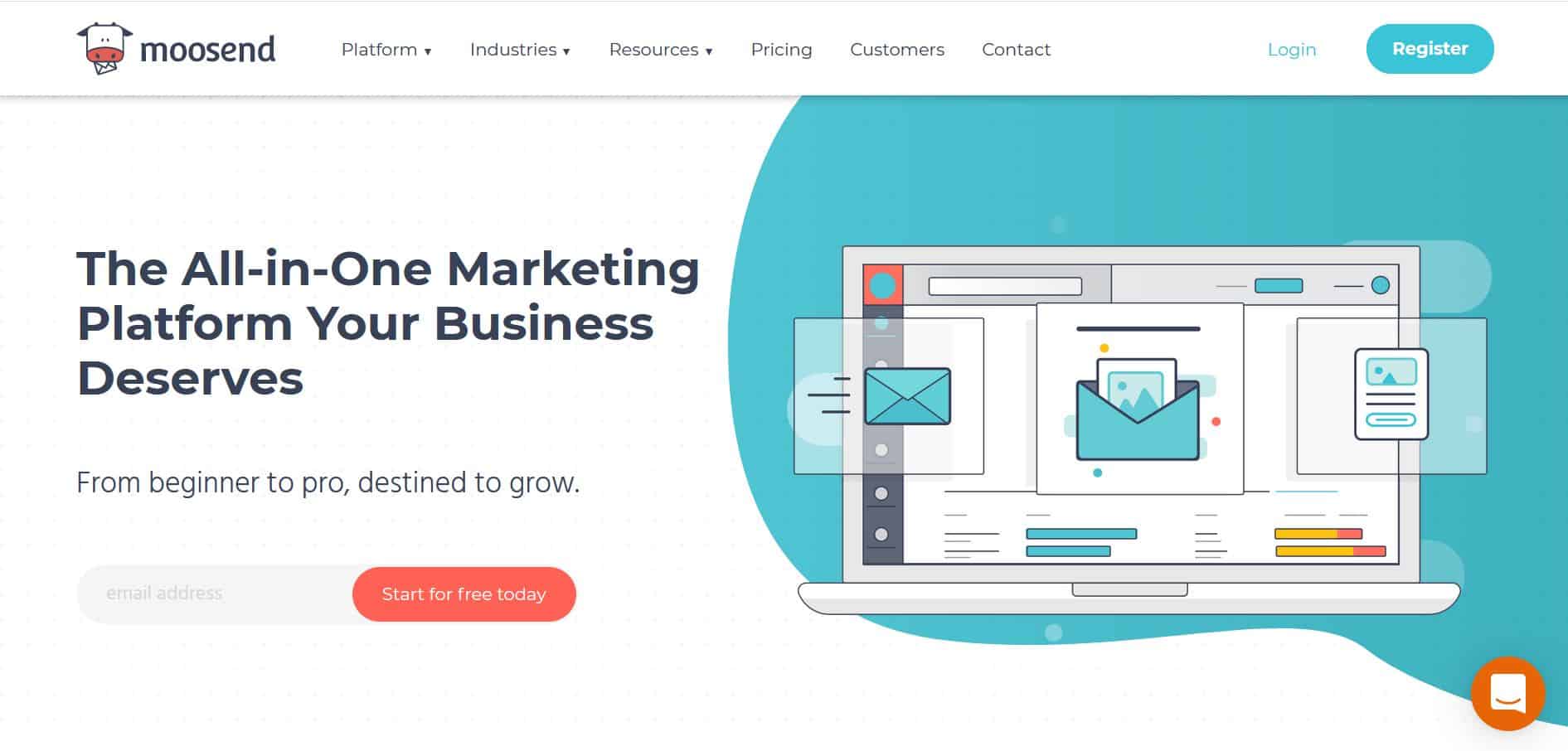
- Drag-and-drop editor
- Email marketing automation
- Spam testing
- A/B split testing
- API access
- Unlimited lists
- Advanced segmentation
Moosend is one of the most affordable email marketing platforms available, thanks to a flexible pricing model that scales with your subscriber count. It is used by businesses of every size, from early-stage startups to large enterprises.
With capable automation available even on entry-level plans, Moosend can meaningfully improve the reliability and effectiveness of your campaigns. Building an email is quick, and the drag-and-drop editor keeps design simple.
Features
Creating and sending campaigns is straightforward, guided by a Campaign Creation Wizard. Importing existing subscriber lists (or building new ones) is easy, and segmentation lets you gather subscriber insight to build more targeted lists. The "Recipes" feature makes it simple to assemble complex automation workflows.
Pricing
Moosend uses a subscriber-based pricing structure. You can choose an always-free tier, or step up to pro and enterprise options whose cost depends on how many subscribers you have.
Pros
- Free trial available
- Plenty of high-quality templates
- Extensive built-in automation
- Simple and easy to use
- Good customer service
Cons
- Sign-up forms could be better
- Occasionally slow to load
- Emails are sometimes flagged as spam
3. Mailchimp Alternative – Constant Contact
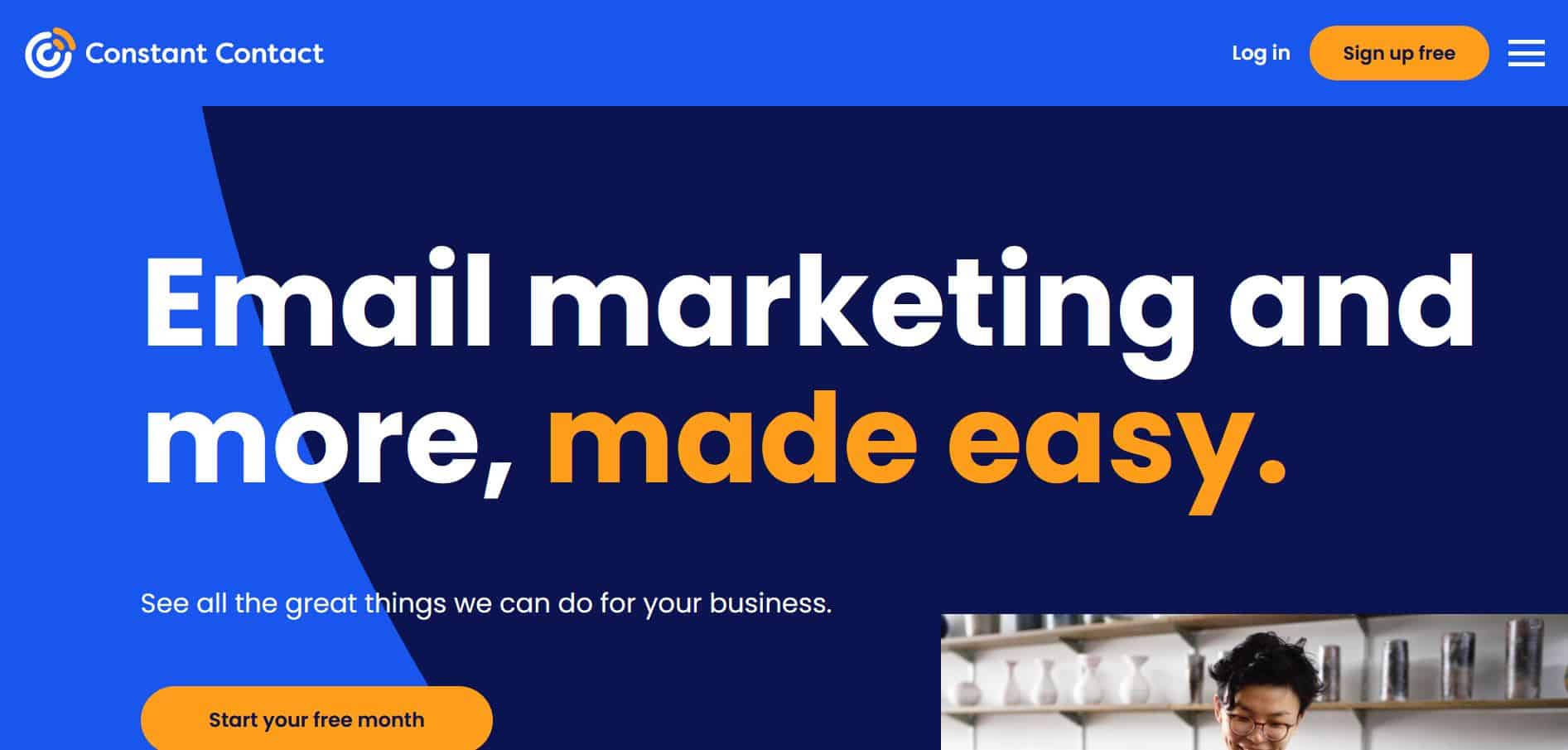
- A/B testing
- List and subscriber management
- Autoresponders
- Mobile-optimised emails
- Reporting and analytics
- CAN-SPAM compliance
Constant Contact earns a spot on our list for its relentless focus on being user-friendly and educating its customers through a deep library of resources.
It covers the essentials well, from an extensive template library to strong social media integration, event management tools, and an app that keeps all of your contacts in a single master list.
Features
Constant Contact's features are approachable, which suits small and medium businesses trying to level up their marketing. You get solid list-building tools, social integrations, click-through tracking, dependable support, and a full content management suite.
Pricing
There is no free-forever plan, but there are flexible plans you can adjust to your needs, plus a lengthy no-questions-asked trial period. Entry plans start at affordable pricing and rise as your list grows and your sending volume increases.
Pros
- Very intuitive interface
- Strong event and commerce integrations
- Social media campaign integration
- Large selection of email templates
- Plenty of value beyond email alone
Cons
- Can get expensive as your contact list grows
- Templates are not very flexible
- Some users report accounts closed without warning
- No true TOTP-based two-factor authentication
4. Mailchimp Alternative – GetResponse
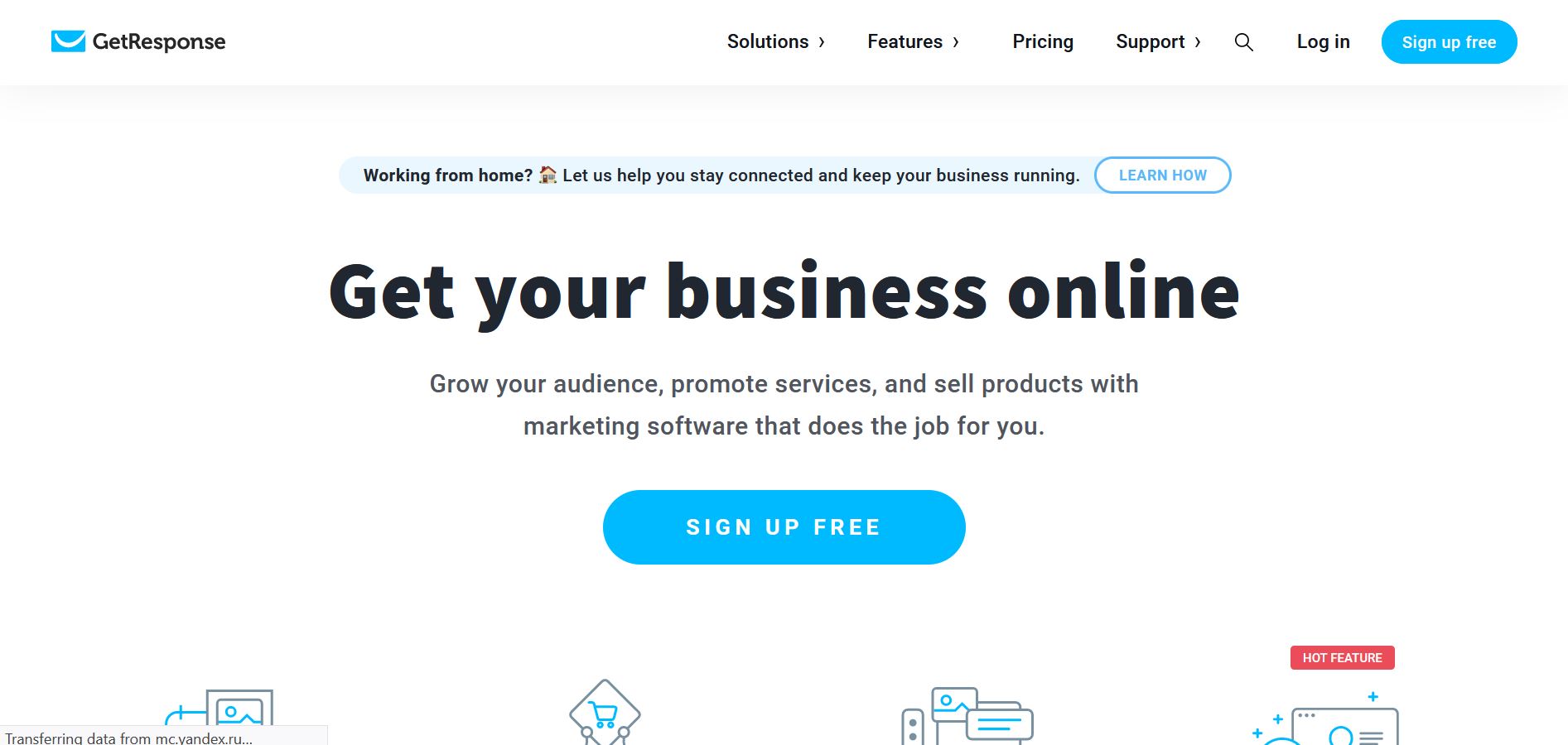
- Automation and segmentation
- Multiple pricing tiers
- Activity tracking
- Scalable autoresponders
- Comprehensive reporting
- Landing page builder
GetResponse is another strong email automation and marketing tool, and a good Mailchimp alternative if you want a lot of capability without a heavy price tag. GetResponse offers excellent value and a wide range of customisation options, so brands can keep a consistent voice rather than fighting the tool to approximate what they want.
There is no free-forever plan, but you can trial it at no cost before committing.
Features
Its templates are genuinely mobile-responsive, and there are plenty to choose from, paired with an easy email creator and a user-friendly landing page builder. You also get strong A/B testing, a lead-nurturing CRM, and advanced segmentation.
Pricing
GetResponse has no free tier, but its plans are affordable, and longer billing commitments (yearly or biannual) bring the monthly cost down noticeably compared with paying month to month.
Pros
- Easy-to-use reporting
- Webinar integration
- More features than many rivals
- Intelligent list automation
- Conversion funnel and lead generation
Cons
- No free plan
- Some templates look dated
- Deliverability is not best in class
5. Mailchimp Alternative – MailerLite
- Sleek, easy-to-use interface
- Drag-and-drop editor
- Free newsletter templates
- Built-in photo editing
- Custom HTML editor
- Subscriber management
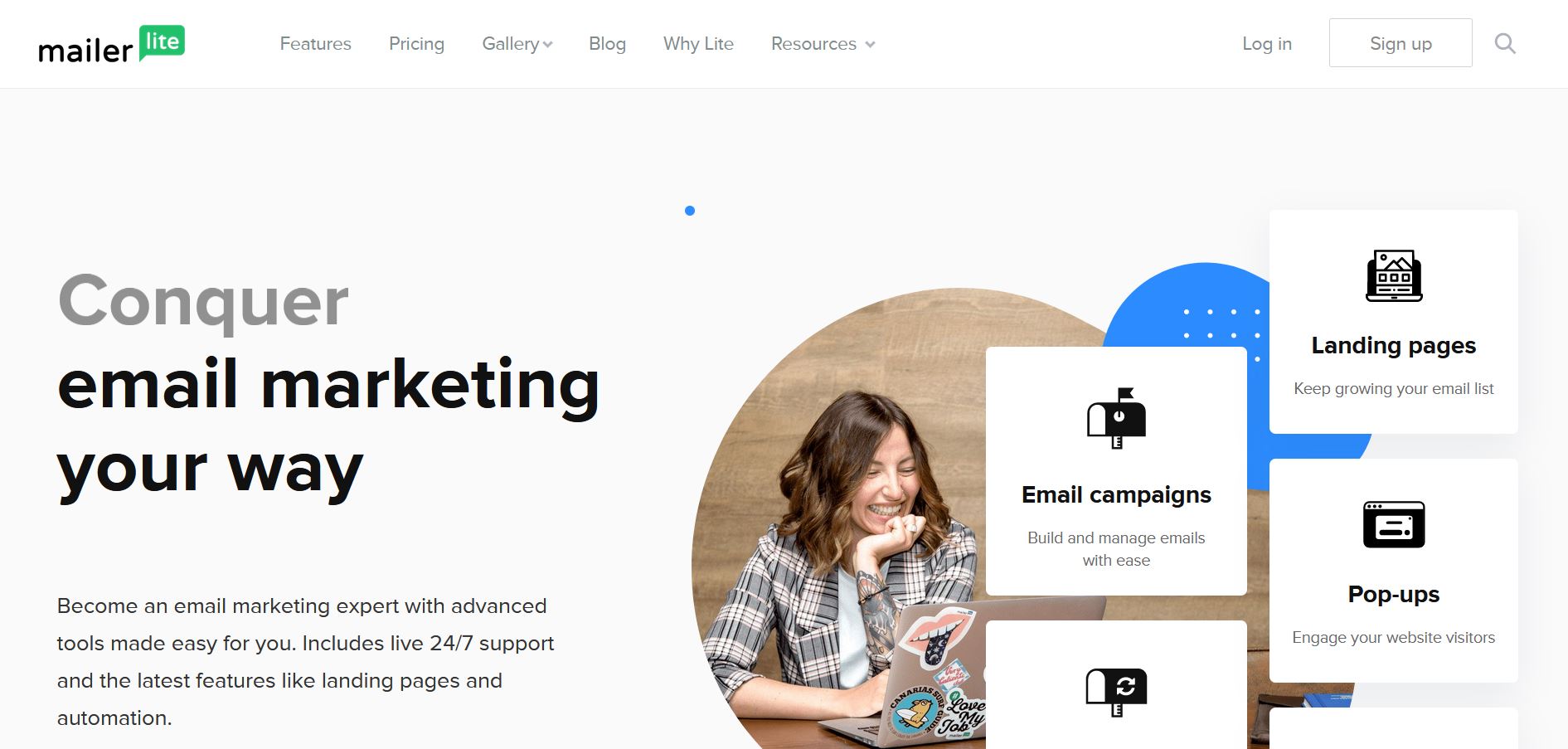
MailerLite is one of the simplest email marketing platforms anywhere, and its feature set could be exactly what a small business needs to grow. It offers plenty of templates, excellent support, and all the tools required to run an effective campaign.
Features
MailerLite helps you set clear marketing goals and hit them. You get a user-friendly file manager, capable editing tools, and subscriber management that shows which contacts deserve your attention. It also includes a pop-up and landing page builder, embeddable web forms, the usual automation and integrations, and 24/7 support via live chat or phone.
Pricing
MailerLite is arguably the best value-for-money Mailchimp alternative on the market, offering a lot for a low price. Paid plans start at affordable entry-level pricing, and there is a genuinely free option, though it is limited and does not include customer support. Overall it is a great choice if you want to send plenty of email at a reasonable price with solid deliverability.
Pros
- Easy drag-and-drop design
- Good deliverability
- Excellent customer service
- Lots of tutorials to help you learn
- Free to get started
Cons
- Building workflows can be time-consuming
- Limited third-party integrations
- Account approval process can be tedious
6. Mailchimp Alternative – AWeber
- Easy-to-use design tool
- Drag-and-drop email creation
- Collect, manage, and segment subscribers
- Third-party integrations
- A/B testing
- Landing page creation
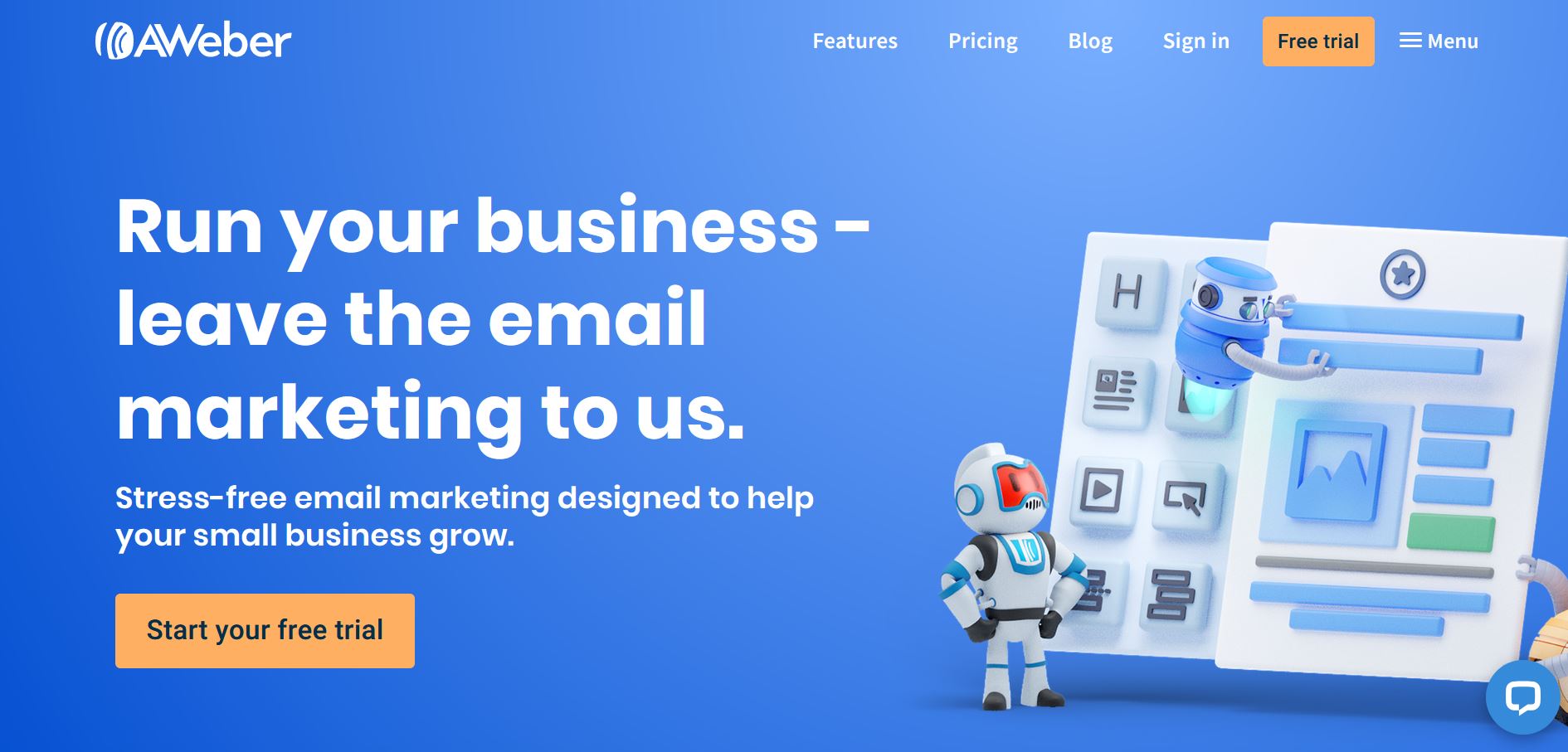
AWeber is a strong pick if you already juggle several tools and want a platform that integrates them cleanly. Its standout quality is how well it lets you personalise campaigns, helping you build a lasting relationship with your audience and lift conversions.
AWeber works with a wide range of platforms, from Unbounce to e-commerce systems like Magento, and offers plenty of testing options at a fair price.
Features
AWeber brings capable automation, a solid HTML template library, strong analytics, and a good mobile app for managing campaigns on the go. Sending bulk email is easy and its segmentation tools are handy. The main weak spot is data importing, which can be fiddly.
Pricing
There is no free-forever plan, but a full trial lets you test every feature. AWeber charges per subscriber, with entry plans starting at affordable pricing. You can be billed annually or quarterly and change plans whenever you like, backed by strong support.
Pros
- Very easy to use
- Free version available
- All features available on every plan
- Good customer support
- Sales tracking included
- Useful list-management tools
Cons
- Automation is fairly basic
- Cannot broadcast to multiple segments at once
- Costs rise steeply at high subscriber counts
- Some templates look dated
The Takeaway
Mailchimp remains an industry leader in email marketing and automation, but its costs can climb quickly. Fortunately, there is no shortage of strong alternatives, several of them more affordable and, in places, better featured than the market leader.
Found another Mailchimp alternative you rate? Let us know in the comments below.
FAQs about Mailchimp alternatives
Who are Mailchimp's competitors?
The most notable competitors right now include ActiveCampaign, MailerLite, Sendinblue (Brevo), GetResponse, Constant Contact, and AWeber. This list shifts over time as new players emerge and others are acquired or wind down, so treat it as a current snapshot rather than a permanent ranking.
Is there a free version of Mailchimp?
Yes. Mailchimp has long offered a free tier suited to small businesses on a tight budget. Most email marketing efforts never reach a large subscriber count, so Mailchimp is a reasonable place to start; you can migrate to a more comprehensive service later if you outgrow it.
What is the best alternative to Mailchimp?
At the time of writing we lean towards Sendinblue (Brevo) as an all-round strong provider across most categories, but the right choice really depends on your needs and goals. In this guide we outline more options and the reasons you might pick each one.
Find out more about us here.