Shopify remains one of the most popular e-commerce platforms in the world, but it isn't the right fit for every business. Before you commit to it, it's worth understanding where Shopify excels, where it falls short, and which of its many alternatives might suit your store better. Below we break down ten strong Shopify alternatives and who each one is best for in 2026.
Why Choose Shopify?
Shopify is probably the best-known e-commerce platform available today, and its broad appeal comes down to accessibility. You don't need advanced technical skills to get the most out of it, and you don't need to hire a web developer, because Shopify makes it genuinely easy to build a store even with no prior experience.
Combine that ease of use with the platform's flexibility and the countless ways you can extend its capabilities, and it's clear why Shopify sits at the top of the market.
The Benefits of Shopify
- Performance: Shopify is one of the most reliable platforms around. It's fast, responsive, and experiences minimal downtime.
- Design: Alongside an intuitive interface, Shopify offers a library of polished themes that outclass much of the competition.
- Usability: The user-friendly design makes it easy for newcomers to get up to speed quickly.
- Support: A vast ecosystem of plugins extends what a Shopify store can do, backed by a network of certified partners offering additional tools and services.
- Apps: Shopify's app marketplace includes some of the best-selling tools on the market.
- Dropshipping: Deep third-party integrations make launching a dropshipping business straightforward.
Why Consider the Alternatives?
There are plenty of reasons to love Shopify, but it isn't a one-size-fits-all solution. Some businesses will be far better served by one of its competitors.
If you already run a content management system, for example, it can feel frustrating to pay again for features you effectively already have. Likewise, freelancers and creative sellers often find that much of Shopify's toolset is redundant for their needs.
The good news is that there are plenty of viable alternatives ready to fill the gaps Shopify leaves. Shopify may be the biggest player in this space, but it isn't the best choice for everyone.
Common Shopify Issues
- Transaction fees: Shopify charges a transaction fee on every sale unless you process payments through its own in-house service.
- Liquid: Liquid, Shopify's custom template language, isn't as straightforward to work with as it could be.
- Advanced features: Some of the best features are reserved for higher-tier plans. Capabilities like real-time shipping rates sit behind more expensive subscriptions, and for many small businesses those costs add up quickly.
- SEO tools: Shopify enforces a fairly rigid URL structure with limited room for customization, which can constrain SEO. If information architecture is central to your strategy, Shopify can feel restrictive.
- Checkout page: One of the most common complaints is how little control you get over customizing the checkout experience on standard plans.
Shopify Alternatives
1. BigCommerce
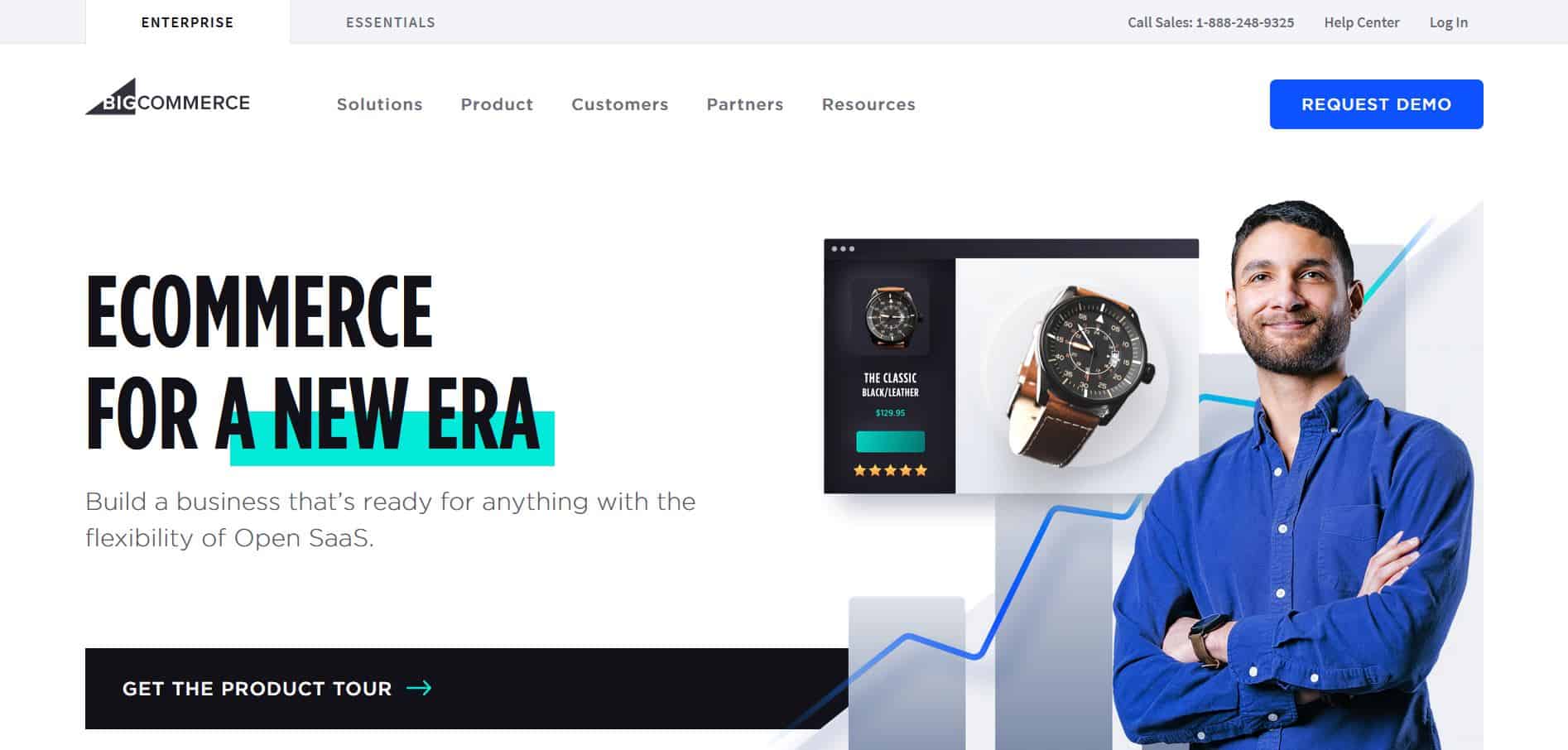
Drag-and-drop editors suit a lot of sellers. They strip away the complexity of raw code and let you focus on how your store looks. BigCommerce is an excellent fit for people who prefer to work this way.
There are plenty of attractive themes, though only a handful are free; the rest sit behind a paywall. Even so, they're generally worth the asking price.
Built-in content marketing features make promoting your store and lifting conversion rates about as simple as it gets. The standard feature set is impressive too, so you can accomplish more without spending extra than you typically can on Shopify.
Another major advantage is multi-channel management. From a single dashboard, BigCommerce lets you run stores across Facebook, Amazon, eBay, and more, syncing your inventory across every channel so you never accidentally oversell.
No platform is perfect. A recurring complaint is bandwidth: some BigCommerce stores load slowly or occasionally return a bandwidth error and fail to load at all.
Several subscription tiers are available, with pricing that scales up as your needs grow. BigCommerce also automatically bumps stores to a higher tier once they cross certain annual sales thresholds, so it pays to keep an eye on your figures to avoid an unexpected jump in cost.
Pros
- Excellent SEO capabilities
- Customizable plans that suit most business models
- Support for an unlimited number of products
- Some of the best themes available on any e-commerce platform
- An extensive feature set
- No additional transaction fees
- Supports multi-channel selling
- Fully hosted
Cons
- Can get expensive for high-volume stores
- A steeper learning curve than some rivals
- Most themes are premium rather than free
- Load speeds can be inconsistent
- No one-click upselling on purchases
BigCommerce is a strong platform for running a larger e-commerce business. Its robust SEO support makes it a good choice for companies planning to grow, just remember to keep an eye on your sales volume and tier.
2. WooCommerce
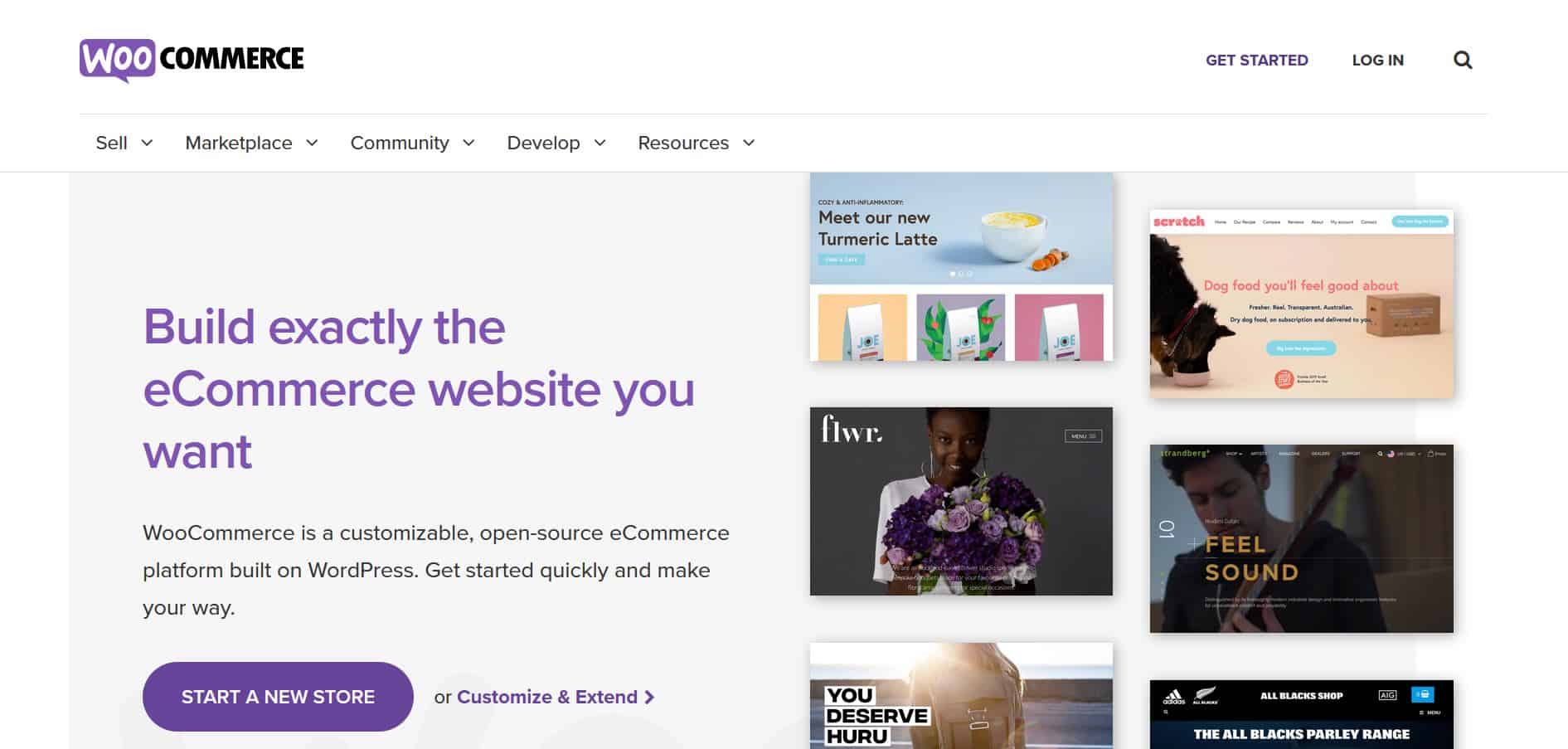
If you already run a WordPress site, WooCommerce is the natural choice. It's free, open source, and continually improving.
WooCommerce is a particularly good option for startups and small businesses. It isn't the most scalable platform out there, though. The core plugin gets new stores off the ground for free, but as your business grows you'll pay for the more advanced extensions.
Even the free version makes it easy to build a mobile-friendly store. You'll need to arrange hosting separately, but for a modest outlay you can have a feature-rich, mobile-ready shop up and running.
There's a deep catalog of extensions, including help-desk and ticketing plugins that let you embed customer support directly into your site. These integrate seamlessly with WordPress and are a big part of WooCommerce's appeal.
Where Shopify is built around a monthly subscription, WooCommerce is far more flexible. You pick the extensions you need à la carte, often paying a one-time fee for the ones you want.
The weakest aspect of WooCommerce is troubleshooting. If something breaks, you're largely on your own to sort it out, and responsibility often bounces between your host and third-party plugins.
Pros
- No additional transaction fees
- Functional free core plugin
- Simple to set up and start selling
- Integrates perfectly with WordPress
- Supports one-click upselling via extensions
Cons
- No hosting included
- Requires some technical knowledge
- Occasional bandwidth issues
- Limited direct customer support
WooCommerce is a fantastic platform and one of the best WordPress plugins available. If your site is content-heavy, it's the ideal option.
3. Volusion
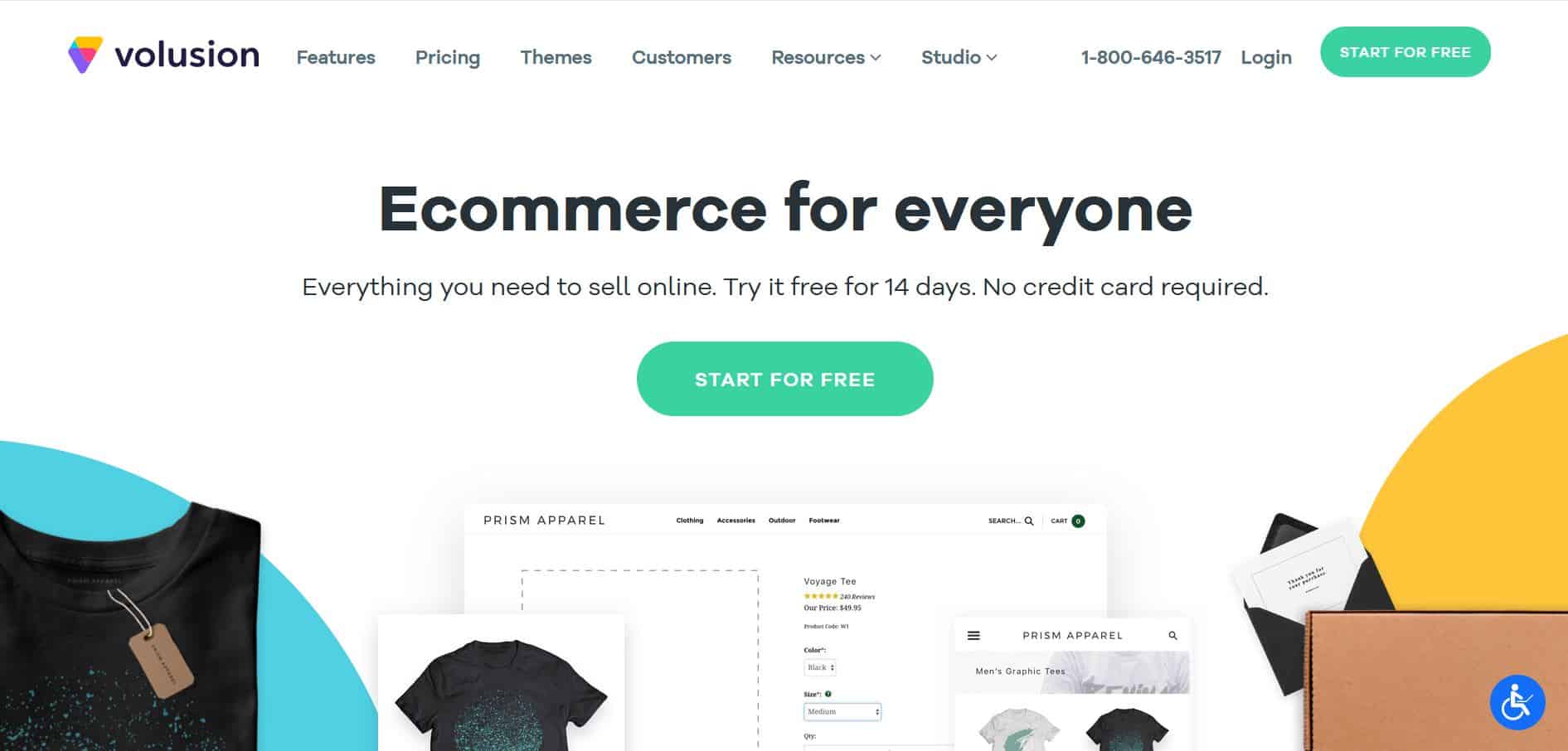
Volusion is a reliable and long-established Shopify alternative, used by hundreds of thousands of businesses. Smaller stores in particular benefit from its cloud-based shopping cart. You need only the most basic technical skills to get started, and there's no need to worry about hosting or integrating third-party applications yourself.
Volusion's plans are shaped around the specific add-ons and features you want, making it one of the more customizable options. Unlike Shopify, it doesn't charge transaction fees on sales made through the platform.
Among its standout features are eBay integration and a streamlined one-page checkout. On the design side, Volusion offers a range of high-quality templates available across all tiers.
One thing to watch is bandwidth. Exceeding your allocation can trigger per-gigabyte overage charges, so it's important to stay within your plan's limits.
Assuming you stay within those limits, Volusion sits at a competitive monthly price point, and its mobile app, available to all users, lets you manage your store on the go.
Volusion is one of the more feature-rich and better-value Shopify alternatives out there. It isn't quite as simple as some rivals, and a basic grasp of coding helps you get the most from it, which makes it better suited to sellers with a little experience than to complete novices.
Pros
- Intuitive and generally easy to use
- Supports unlimited products
- No additional transaction fees
- Numerous high-quality themes included for free
- A strong mobile app for managing your store anywhere
- Supports multiple payment processors
Cons
- Not as feature-rich as some hosted rivals
- Can be slower than competitors
- Strict monthly bandwidth limits
- Limited integration with product listing ads and Pinterest
- Benefits from a basic understanding of coding
- The product search function could be better
Volusion is an excellent option for many businesses. A basic grasp of coding helps, but the payoff is worth it, and the mobile app makes managing your store on the move genuinely easy.
4. LemonStand
LemonStand is a good fit for medium to large e-commerce businesses. All of its plans provide the same core features; the main difference between them is the number of monthly orders a store is allowed to process.
LemonStand is highly customizable and one of the more versatile platforms on the market, but it comes with a steep learning curve. If you don't know how to code, you'll likely need a developer to make the most of it. On the plus side, it's one of the easiest platforms to migrate to: anyone already running a store on BigCommerce, Magento, or Shopify will find the switch straightforward.
Pricing scales with your plan, and the key thing to watch is the monthly order limit attached to each tier. If you want to handle high order volumes, you'll need to move up to the top-tier plan.
Another common gripe is that the bundled add-ons and templates can feel thin, and the best premium templates carry a price that isn't always realistic for smaller stores.
Pros
- No additional transaction fees
- Excellent integration with most payment processors
- Supports subscriptions and recurring orders
- Powerful SEO tools
Cons
- Strict monthly order limits
- Needs solid coding skills to unlock its customization
- Fewer bundled third-party apps than some rivals
5. Shift4Shop (formerly 3dcart)
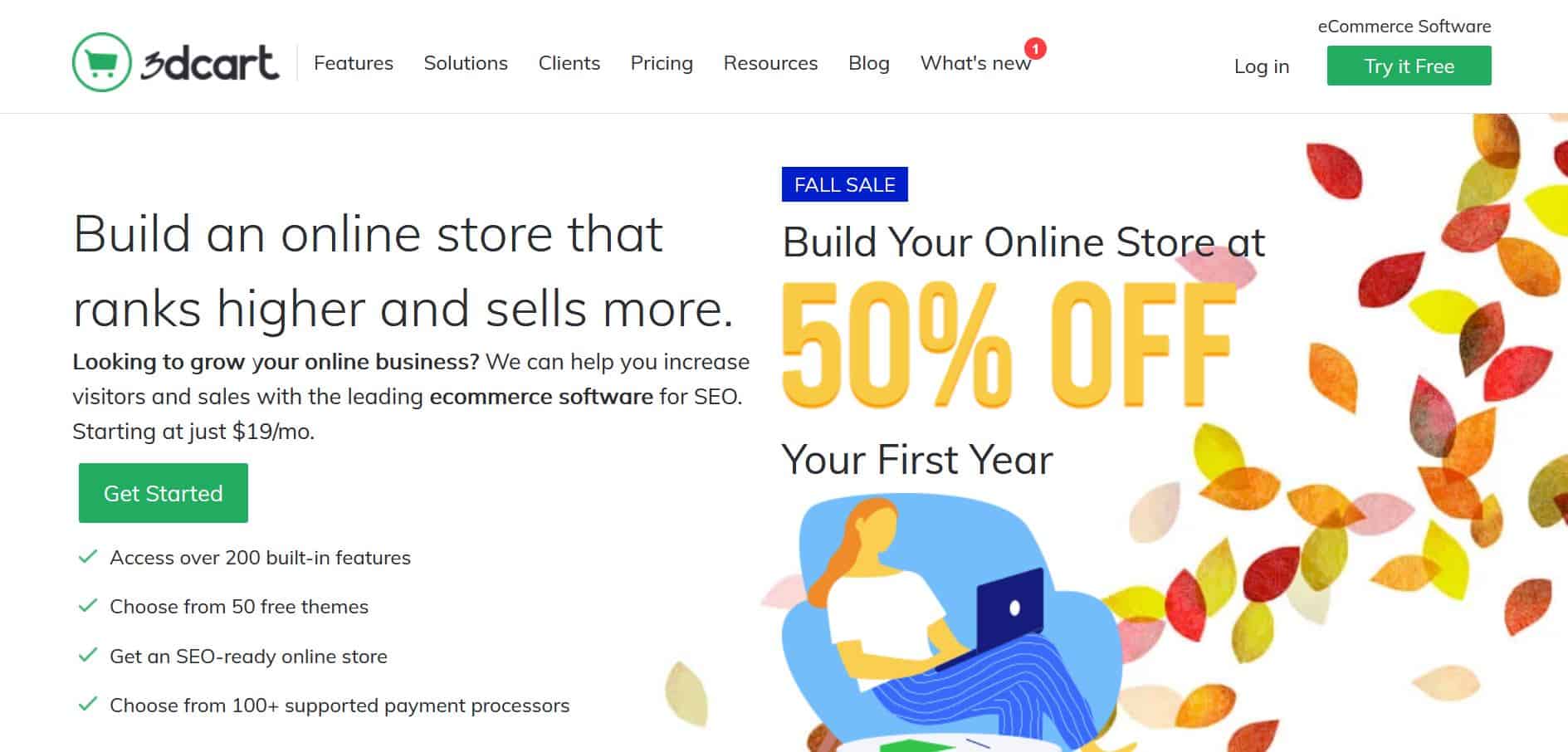
Shift4Shop, which many sellers still know as 3dcart, is one of the strongest cloud-hosted shopping-cart platforms on the market. It's packed with features and offers flexible pricing that keeps it accessible to businesses of all kinds. Unlimited product storage makes it highly scalable, and it's backed by industry-leading security.
Move up to the premium tiers and you unlock SEO tools plus a host of features other platforms lack, including abandoned-cart emails, support for subscription purchases, coupons, and personalized products.
One caveat: despite supporting multi-channel synchronization, order tracking, and dropshipping, its on-site product search is weak, which may be a deal-breaker for some sellers.
Newer stores will appreciate the platform's versatility. It even offers an in-house web design service that handles admin like your SSL certificate while tailoring your store's interface and experience to your target audience.
Pros
- Supports dozens of payment gateways
- Unlimited product listings
- Among the fastest load times available
- Excellent mobile store speeds
- More feature-rich than many competitors
- No transaction fees
- In-house web design service
Cons
- Customer service could be better
- Some themes look dated
- Mobile interface isn't quite as slick as Shopify's
- Occasional upgrade friction
6. Big Cartel
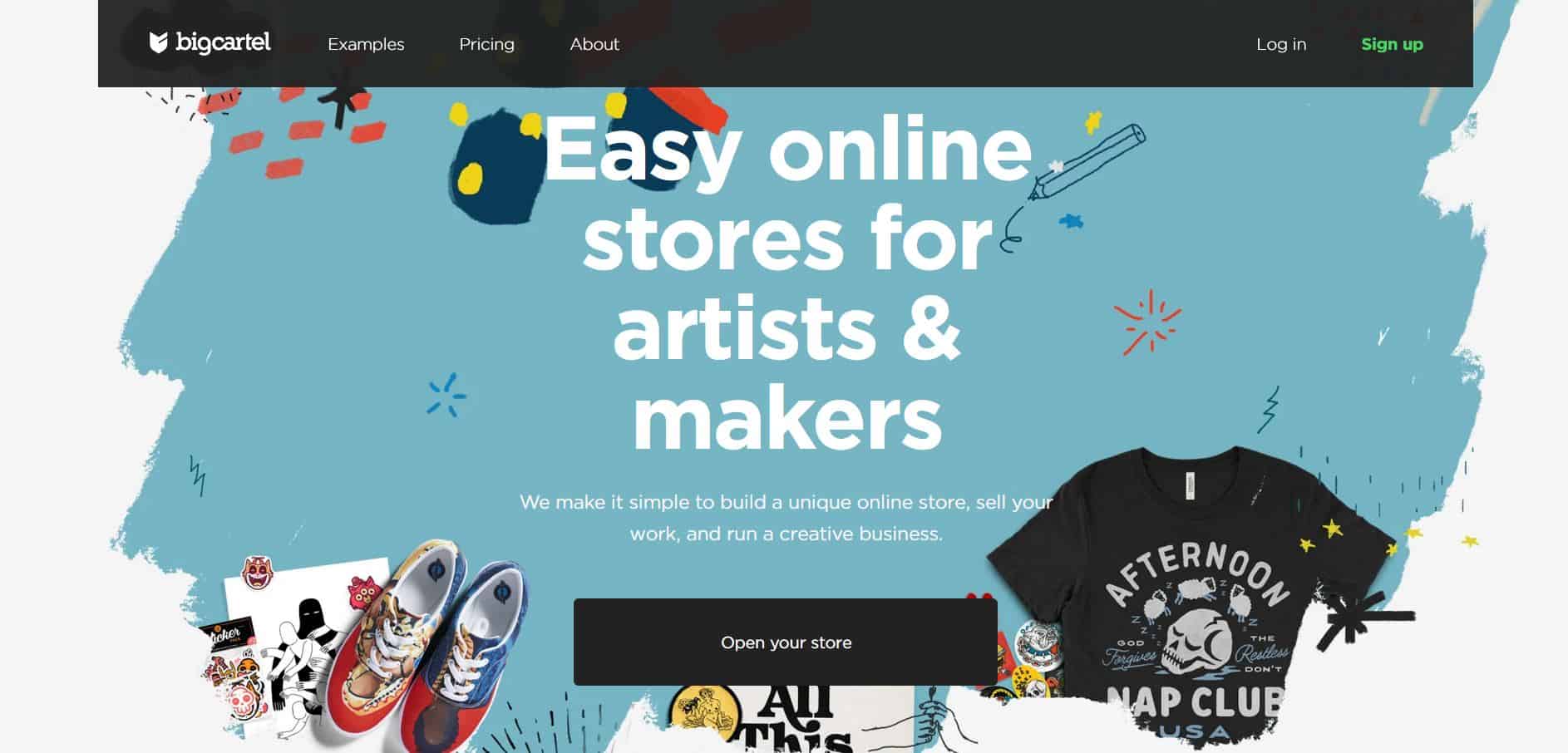
Big Cartel has become a favorite among artists and independent creatives thanks to its affordability and focused feature set. With inventory tracking, unlimited bandwidth, and CSS and HTML customization, it offers a surprisingly capable toolset for smaller sellers.
Its feature set is more limited than Shopify's, but it's far more affordable and works better for small businesses and solo entrepreneurs. Google Analytics is integrated by default, and Facebook and PayPal support is available with no coding required.
There are no additional transaction fees to worry about, though PayPal will still apply its own processing fees. One real drawback is support: there's no live chat or phone line, so getting help when you need it can be harder than it should be.
Premium plans are reasonably priced, and there's a free tier for very small catalogs. There's no inventory search function, but for shops with a modest product line this is an ideal platform.
Pros
- No transaction fees
- Integrates seamlessly with PayPal
- Free plan suits stores with just a few products
- Intuitive user interface
- One of the most affordable options available
Cons
- Customer support is limited
- Not ideal for larger businesses
- A relatively lean feature set
- No inventory search
7. Magento
Magento (now Adobe Commerce) is a free, open-source e-commerce platform aimed at medium to large businesses, and it's best suited to those with in-house programmers. For small companies and individuals with little or no coding experience, it probably isn't the right choice.
For mid-size and larger businesses with access to skilled developers, though, it's one of the most powerful platforms out there. The flexibility and scalability on offer are genuinely impressive, even if they require real technical know-how to unlock.
The community edition of Magento is completely free. There's also a paid enterprise tier aimed at large organizations, priced accordingly.
Pros
- No monthly charges on the open-source edition
- Advanced SEO features
- Robust inventory management
- Supports numerous payment gateways
- API for online services
- Thousands of plugins and extensions
Cons
- Requires coding experience
- You'll need to arrange separate hosting
- Not suitable for beginners
8. Wix
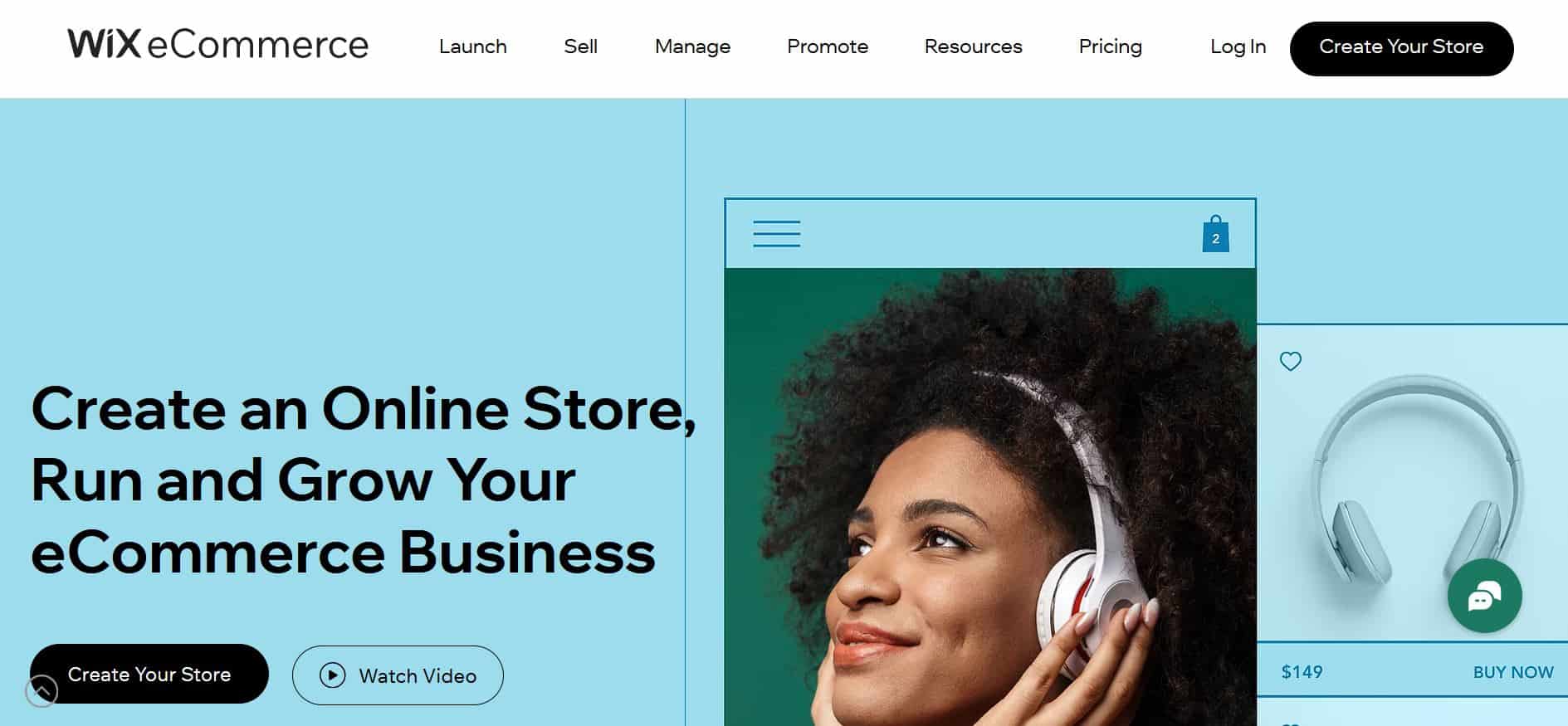
Wix offers one of the most approachable interfaces around. Combine that with its customizable, affordable plans and it becomes a strong e-commerce option for businesses of all sizes. The starter templates are high quality, and a wide range of third-party apps integrate seamlessly with the platform.
There are two ways to build a Wix site. You can let an automated assistant guide you through a short questionnaire, or you can set everything up yourself using the largely drag-and-drop editor.
Pros
- Drag-and-drop editor
- Extensive features
- A large template library
- Supports numerous payment gateways
Cons
- Traffic and bandwidth limits on some plans
- SEO capabilities aren't as strong as rivals'
- Fewer apps than Shopify
9. Squarespace

Squarespace is an ideal platform for sellers with a reasonably small product catalog. The website builder included with the platform supports a wide range of templates and themes, making it easy to tailor your site to your taste. With a little tweaking you can create something genuinely distinctive that stands out from other stores.
Its entry-level plans are affordable and surprisingly capable, covering unlimited pages, blogging, storage, and more.
On payments, Squarespace is limited to a handful of processors such as Stripe and PayPal. There are no additional platform transaction fees on its commerce plans, but the payment providers themselves still apply their standard processing fees.
Pros
- Simple to set up
- Great for new stores
- Excellent themes
- No additional platform transaction fees on commerce plans
Cons
- Customer support could be stronger
- Limited multi-channel features
- Relatively few add-ons
10. PrestaShop
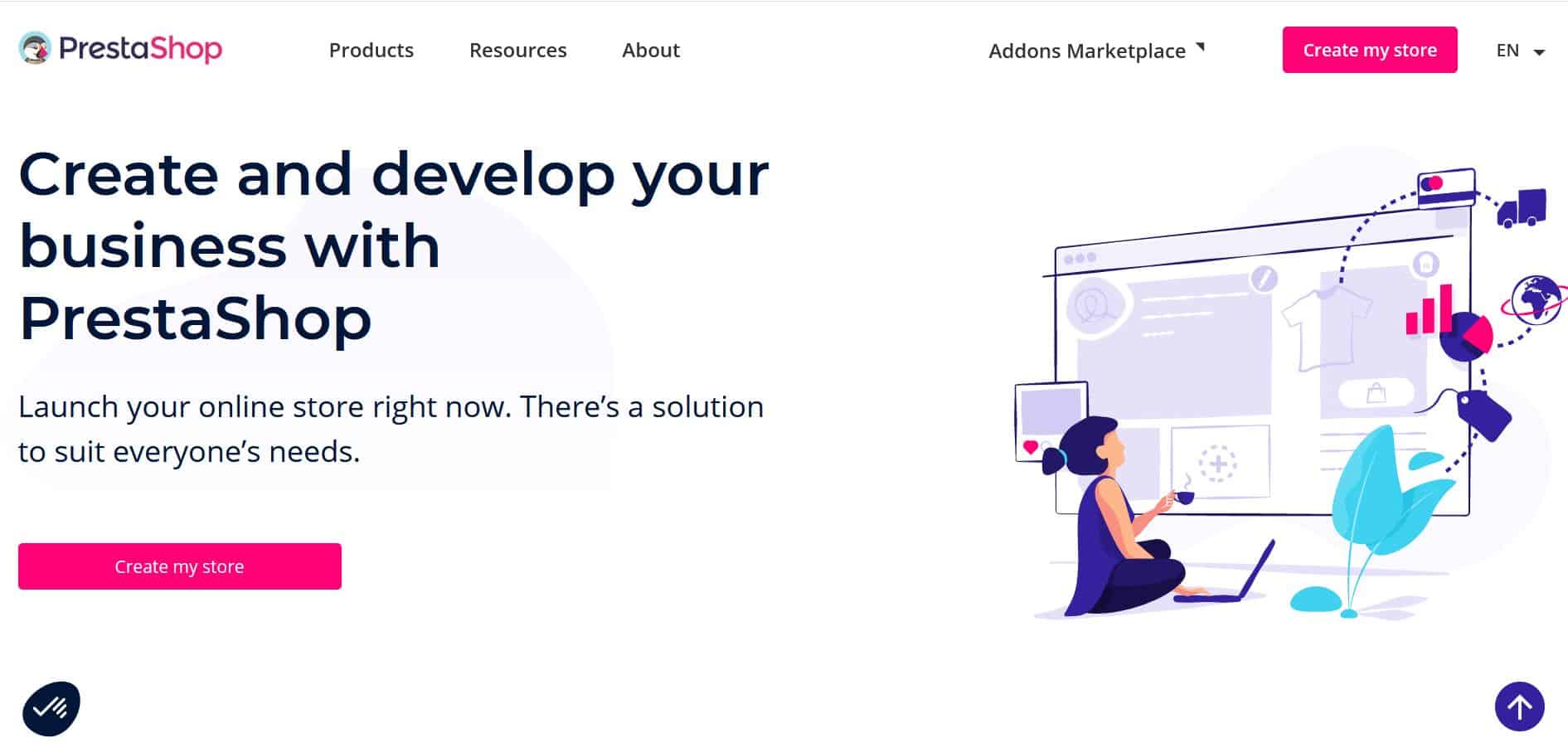
PrestaShop is a solid platform for any e-commerce business working to a tight budget. It isn't quite free, since you'll need to pay for hosting and a domain separately, but the PrestaShop software itself carries no entry fee.
As you'd expect from a free platform, it doesn't offer as many templates or themes as some competitors. Even so, it's one of the more usable and beginner-friendly free e-commerce platforms available.
PrestaShop isn't especially scalable, but it's one of the best options for stores that are just getting off the ground.
Pros
- Free software
- No transaction fees
- Multilingual support
Cons
- Limited scalability as you grow
- Requires separate hosting and setup
The Bottom Line
Shopify is an excellent e-commerce platform, but it's far from the only option. The platforms above each cater to a different audience, and all of them come recommended. There's no single "best" choice; the right one depends entirely on your business, your budget, and your technical comfort level. If you're also looking for an email marketing service for your store, take a look at our guide to the top email services for Shopify users.