A virtual private network is one of the simplest, most affordable ways to strengthen your company's security, both today and over the long run. Personal and corporate VPNs were once entirely separate worlds, but that line has blurred: many of the best-known providers now offer business-grade tiers alongside their consumer apps. The result is more choice and better protection for teams of every size.
Below are six of the best business VPNs available in 2026, from full zero-trust network platforms to consumer services that punch above their weight for small teams and sole traders.
1. Best overall business VPN: NordLayer
- Number of servers: 3,000+
- Server locations: 30+
- Static IP: Yes
- Maximum devices supported: 6
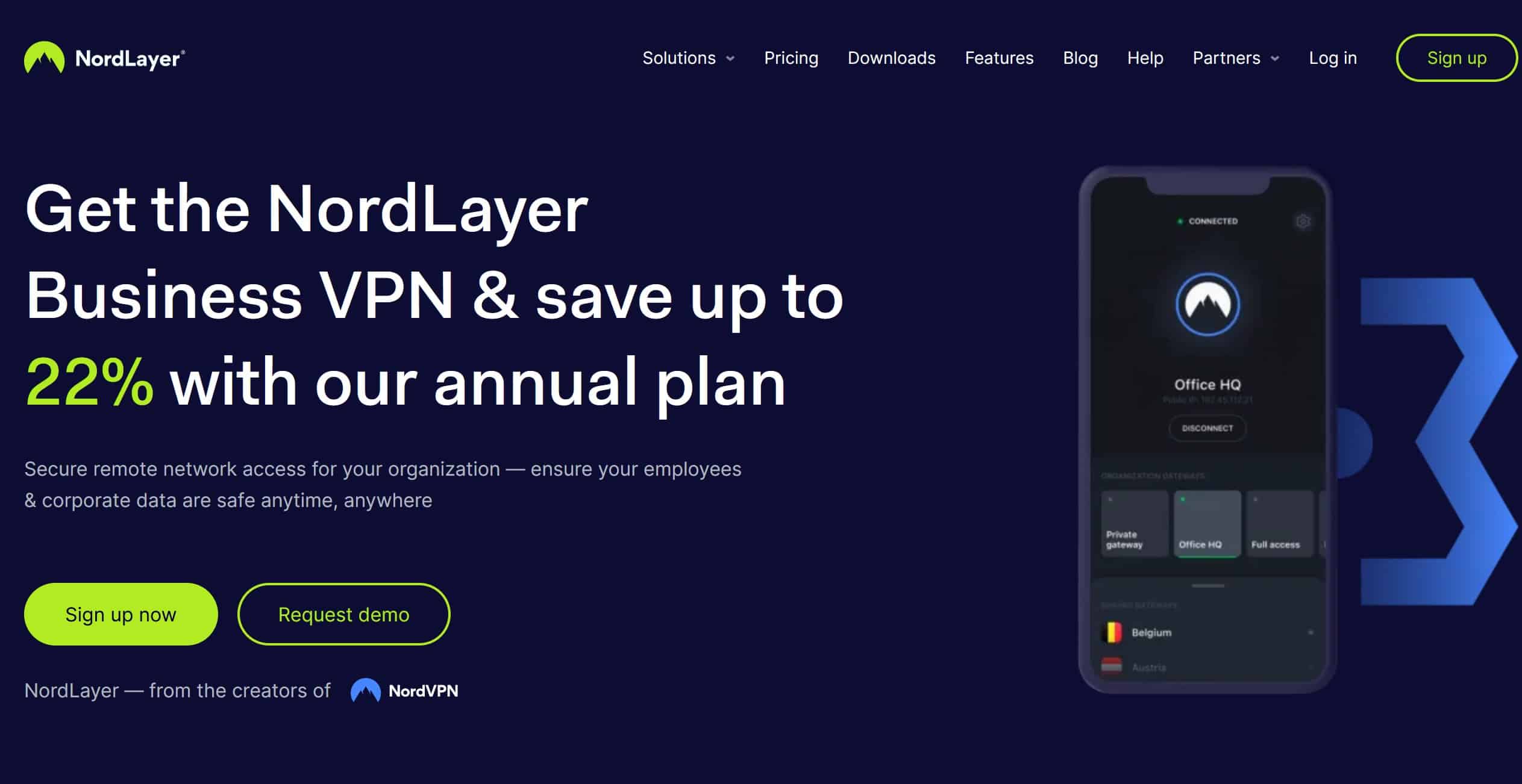
If you know the name of only one VPN, it is probably NordVPN. The company launched NordLayer as a business-focused counterpart to its consumer service, with more robust encryption and management tools built for teams rather than individuals.
One of NordLayer's standout features is its use of AES-256 encryption with an optional double-encryption layer. That is the kind of overkill that lets a business trust the service with its most sensitive data. Even if traffic is intercepted, there is no realistic way to decrypt and read it.
For teams that want every packet routed through a secure tunnel, NordLayer includes a kill switch. The moment it detects your connection dropping, it halts outgoing traffic until the tunnel is re-established. A comprehensive no-logs policy keeps your activity private.
NordLayer also offers dedicated servers and dedicated IP addresses for internal use, so your team can lock down access to company resources. Pricing is tiered per user, and larger deployments can request a custom quote.
Pros
- Strong AES-256 encryption with optional double-encryption
- Thousands of servers worldwide
- Strict no-logs policy
Cons
- Custom quotes required for larger teams
2. Best VPN for small businesses: Perimeter 81
- Number of servers: 700+
- Server locations: 35
- Static IP: Yes
- Maximum devices supported: 5
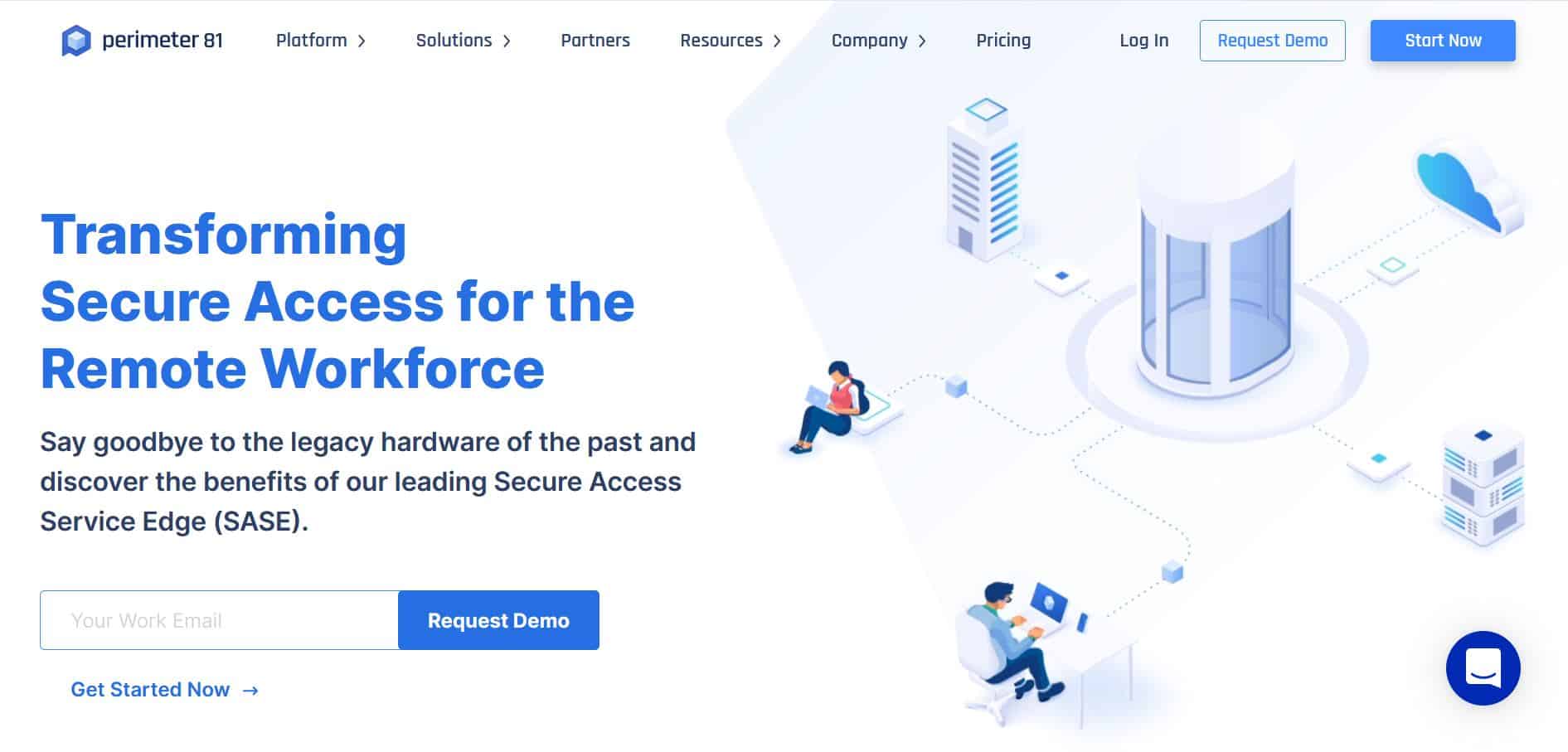
For small and medium-sized businesses, Perimeter 81 is one of the strongest options on the market. Anyone looking to replace a hardware-based VPN will struggle to find something more comprehensive.
One caveat: Perimeter 81 is designed for a minimum of five team members, so sole traders may prefer one of the other options below. But if you need to cover a growing team, this cloud-based platform lets you scale quickly without investing in expensive on-premise hardware.
Everything runs through a single unified console, giving your team full control over network and access settings. The software supports Windows, macOS, Linux, iOS, and Android, along with Chromebook.
State-of-the-art protocols including OpenVPN, WireGuard, and IKEv2, combined with a zero-trust architecture and automatic Wi-Fi security, make Perimeter 81 one of the most secure options for smaller companies. Multi-factor authentication adds another layer at login.
Using a software-defined perimeter, Perimeter 81 limits network access through granular controls and integrates smoothly with popular cloud services. Signing up gives you access to responsive customer support and a 30-day money-back guarantee, so you have a full month to confirm the fit.
Pros
- 30-day money-back guarantee
- Dedicated management console with extensive network and team tools
- Highly customizable plans and teams
- Seamless scaling and simplified deployment
Cons
- The five-user minimum is too restrictive for solo users
- Logs some session data for service improvement
- Costs can climb as your team grows
3. Best zero-trust VPN alternative: Twingate
- Number of servers: 100+
- Server locations: Anywhere
- Static IP: Yes
- Maximum devices supported: 2 per user on the starter plan, 5 per user on the team and business plans
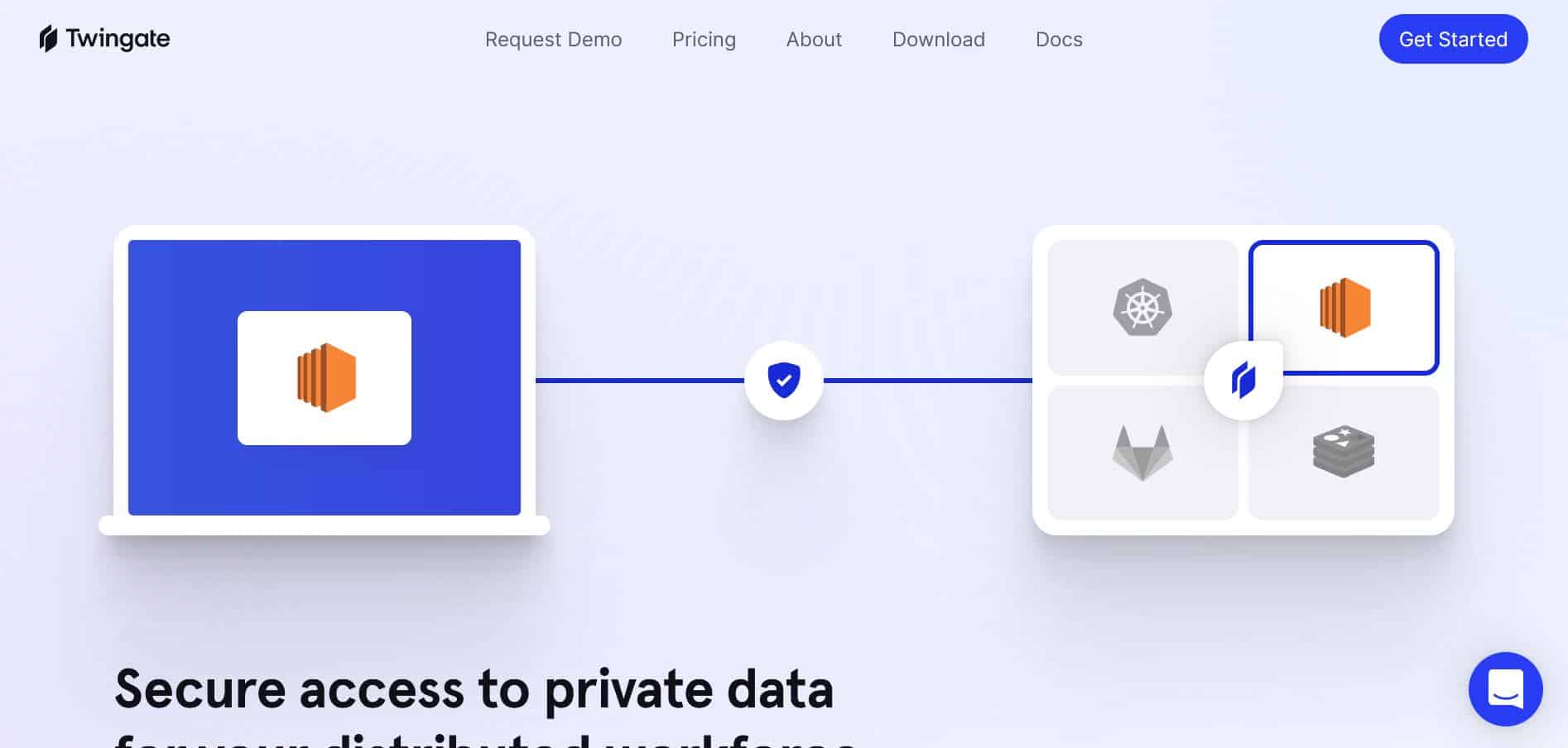
Twingate is not a VPN in the traditional sense, but it is a virtual private network in the technical one. Twingate gives businesses secure remote access to their data, applications, and internal environments by granting each device access only to the specific resources it is permitted to reach. If one device is compromised, the rest of the network stays protected.
Because it authorizes access at the application level rather than the network level, Twingate offers tighter security than traditional VPNs that expose an entire network once a device connects. That dramatically narrows the blast radius of any attack.
A key difference is that Twingate uses a single, centralized point of control rather than a sprawl of internet-facing servers. Once the web admin console is set up, any device with the right permissions can reach the resources it needs. Split tunneling routes only company-bound traffic through Twingate, while everything else goes straight to its internet destination, keeping performance high and exposure low.
Twingate is also fast to deploy and easy to manage from anywhere thanks to its web-based console, and it scales to as many devices as your organization needs. With reduced breach risk, lower infrastructure costs, and rapid setup, Twingate is an excellent fit for security-conscious teams.
Pros
- 14-day money-back guarantee
- Apps for macOS, iOS, Windows, Linux, and Android
- Centralized admin console for easy configuration
- Protects the whole network, not just individual sessions
- Uses 128-bit or 256-bit AES encryption
Cons
- Per-user billing can get expensive at enterprise scale
4. Best small business VPN: Encrypt.me
- Number of servers: 115+
- Server locations: 60
- Static IP: Yes
- Maximum devices supported: Unlimited
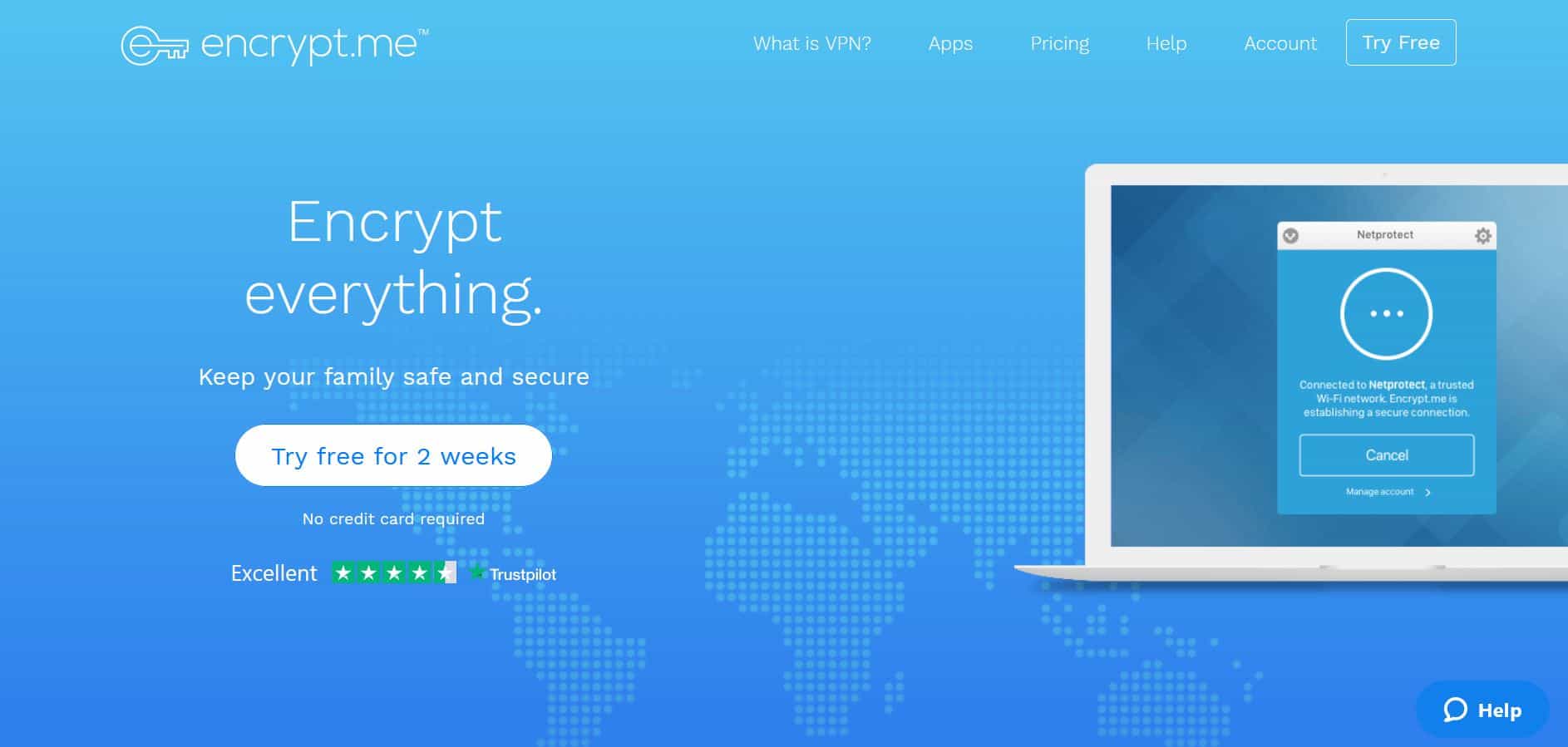
Encrypt.me is built specifically for businesses, and it is one of the few services that includes unlimited simultaneous connections on every plan. In principle you could connect hundreds of devices at once without any impact.
Encrypt.me runs on nearly every platform: iOS, Android, macOS, Windows, and even Amazon devices. Installation is straightforward and setup is quick once you have an account. Security protocols are consistent across devices, every version includes DNS leak protection, and private endpoints let staff connect securely to your office network from anywhere. Content filtering lets you block specific sites across your network.
Pricing typically starts around $16 per month with a two-user minimum, which represents solid value given the unlimited connections. The main drawbacks are a Windows app some users find dated, and the fact that the service logs some activity. A two-week free trial gives you time to decide whether it fits.
For SMEs that want a VPN with unlimited simultaneous connections, Encrypt.me is a strong pick. The logging policy may deter privacy purists, but the intuitive interface and generous device limits win many teams over.
Pros
- Unlimited simultaneous devices
- 14-day free trial
- Intuitive and simple to use
Cons
- Relatively few server locations
- Logs some session data
5. Best VPN for individuals and sole traders: ExpressVPN
- Number of servers: 3,000+
- Server locations: 160
- Static IP: No
- Maximum devices supported: 8
ExpressVPN is an excellent choice for individuals and sole traders. There is no dedicated business plan, but ExpressVPN delivers a fast, secure service with genuinely global server coverage.
It runs on just about anything: desktop clients for Windows and macOS, mobile apps for iOS and Android, plus support for Linux, Kindle Fire, Chromebooks, and browser extensions for Firefox and Chrome. Every app is simple and reliable.
Like all the best providers, ExpressVPN uses state-of-the-art encryption. Dedicated DNS servers and split tunneling reinforce that protection, and a strict no-logs policy means no record of your browsing is kept. If you hit a snag, 24/7 live chat support is on hand.
While ExpressVPN costs a little more than some consumer rivals, it is far cheaper than most dedicated business VPNs, making it one of the best all-round options for very small teams.
Pros
- Excellent performance and specs
- Available on almost any device
- Very strong encryption
- Excellent 24/7 customer support
Cons
- No dedicated business subscription plan
6. Best budget VPN for small teams: IPVanish
- Number of servers: 1,500+
- Server locations: 75+
- Static IP: No
- Maximum devices supported: Unlimited
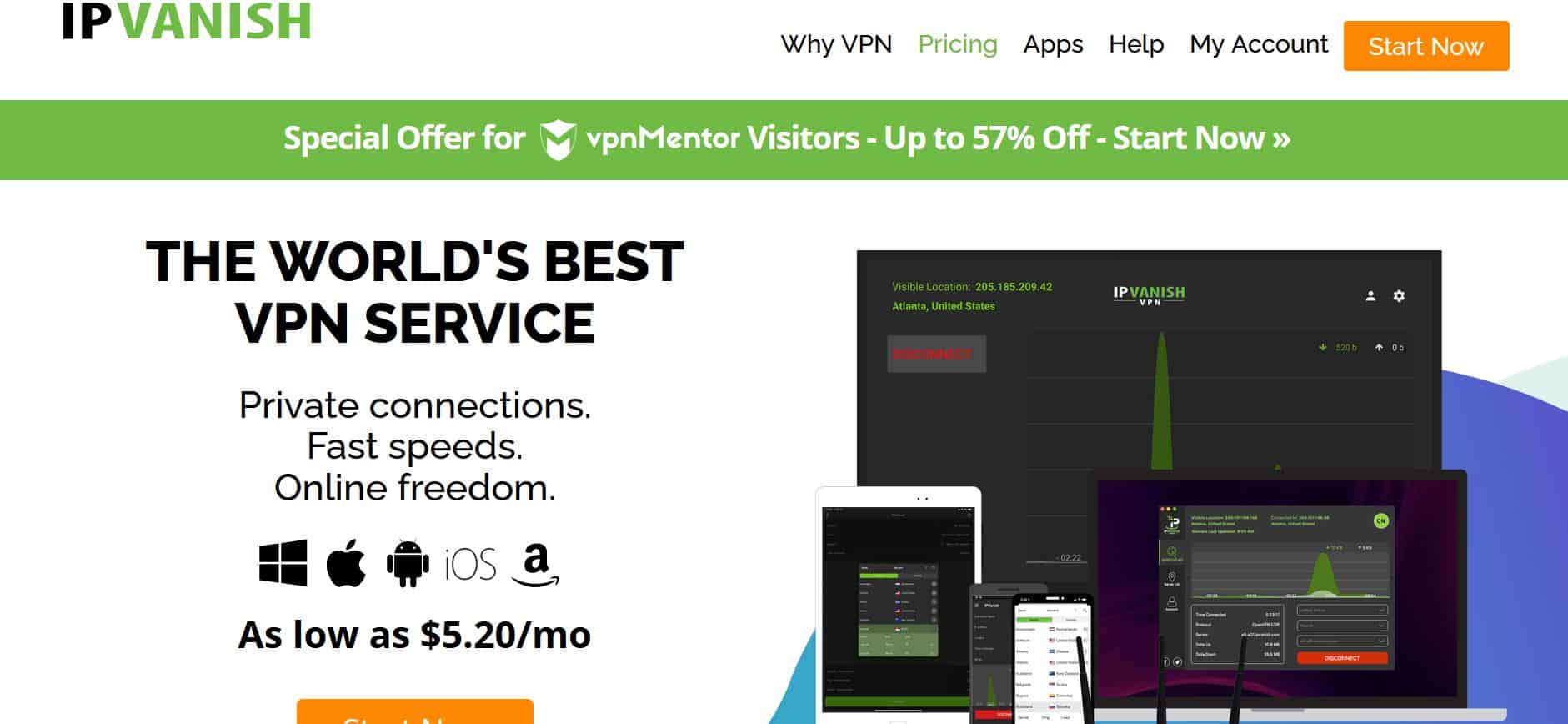
IPVanish is another consumer provider whose service happens to suit small businesses well. It offers unlimited simultaneous connections, letting firms cover all their devices under a single plan. Note, though, that the terms of service intend each account for a single household; registering too many devices may prompt IPVanish to review your access.
Whether you run it on Windows, macOS, or mobile, the apps are stable and easy to use. Wherever you are, IPVanish's global server network means you can almost always find a fast, suitable connection.
Round-the-clock support is available to walk you through any technical issues. IPVanish is a great fit for smaller businesses and sole traders, though larger organizations may miss dedicated business features. Either way, it is a fast, secure, and reliable provider with high-speed servers worldwide.
Data security has never mattered more than it does in 2026. Any of the business VPNs above will let your team connect to company systems remotely and securely.
Pros
- Unlimited simultaneous devices
- Live chat support
- Top-quality apps
Cons
- No dedicated business version
Frequently asked questions about business VPNs
Do I need a VPN for my small business?
A business VPN isn't strictly essential, but it is highly recommended for security. It protects your company from cyberattacks and data loss, and it lets employees log into company systems from anywhere, safely and securely.
How much does a VPN cost for a company?
Business VPNs are generally affordable and usually priced per user, which makes them cost-effective for small teams. It pays to compare plans and pick the feature set you actually need.
Why do companies use a VPN?
Companies use VPNs to guard against security breaches and to reach geo-restricted resources. A good VPN ensures only authorized people access company data and that anyone logging in remotely does so over a secure connection.
Are VPNs legal?
In a few countries, such as China and Russia, VPN use is restricted. In the US, UK, Canada, and across Europe, VPNs are legal so long as they aren't used for illegal activity.
You can read our terms of service here.