A sales funnel is the path a stranger travels to become a paying customer, and the right software turns that path into a repeatable, measurable system. The tools below cover every stage of that journey in 2026, from capturing an email address to closing the final sale. Each one earns its place for a slightly different reason, so the best pick depends on what your business actually sells and how you reach your audience.
1. ConvertKit

ConvertKit has long been one of the most popular email marketing tools available, and it remains a fantastic option for any business built around audience-building. Bloggers, creators, and podcasters gravitate to it because it pairs customized landing pages with embedded forms that feed directly into their email marketing and drive conversions.
Part of ConvertKit's appeal is its tagging system, which lets you divide subscribers into focused groups that share an interest. Once your audience is segmented, you can send each group tailored messages designed to resonate with them specifically rather than blasting everyone with the same email.
ConvertKit has earned its stellar reputation, and it is one of the most dominant brands in the email marketing space today. The tools are intuitive and high-quality, so they are easy to learn and produce reliable results.
The one caveat is that ConvertKit is a fairly specialized tool, aimed squarely at creative businesses that depend on ongoing audience engagement. That said, it integrates seamlessly with a wide range of other marketing tools, so you can slot it into most existing workflows. If your business is content-driven, it has plenty to offer.
Key features of ConvertKit
- Powerful yet simple visual automation editor
- Easy subscriber organization using tags
- Integrations with a wide range of tools and software
- Automated, personalized emails that are quick to set up
- Customizable opt-in forms with a streamlined embedding process
- Insight into how your audience interacts with your emails
Pros
- Easy to use
- Excellent deliverability rates
- Auto-resend capability
- Regular product updates
- Tag-based subscriber system
Cons
- Limited integration with e-commerce platforms
- Not ideal for managing multiple clients
- More expensive than some alternatives
2. Leadpages
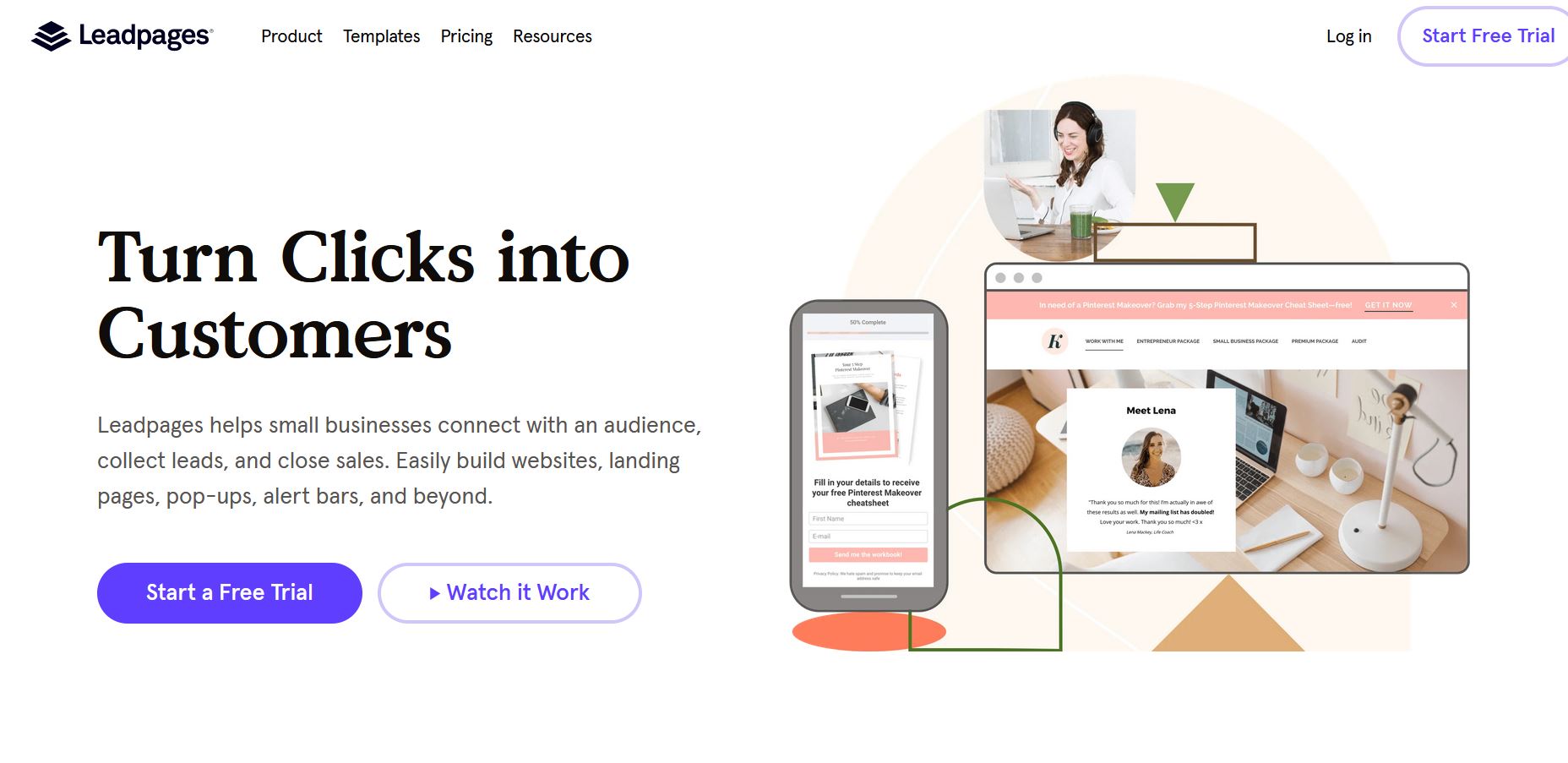
Leadpages is one of the best landing page builders on the market, and it has clearly earned its reputation. It delivers a genuinely powerful page creator without breaking the bank, sitting among the more reasonably priced options available. It is also one of the simplest and most straightforward builders out there, so you can put together a fully featured landing page in almost no time.
The real standout feature is the template library, which includes a large number of designs already optimized for mobile. These templates give you a solid starting point that you can customize by dragging and dropping widgets and other elements onto the page. As you build, you can run A/B tests to confirm your pages stay well optimized and do not slow down as you add more elements.
The ability to integrate Leadpages with other marketing and lead generation tools makes it easy to extend the feature set even further. The builder itself is simple to use, though it is one of the slower tools on this list. It is not slow enough to cause real problems, but if speed is a priority you may find other options more appealing. If your marketing leans heavily on mobile, the range of mobile-friendly templates more than makes up for it.
Key features of Leadpages
- No coding required thanks to an intuitive drag-and-drop builder
- Hundreds of templates to speed up your design work
- Plenty of mobile-friendly layouts
- Easy to add advanced elements and widgets
- Built-in A/B testing to gauge how well your pages convert
- A large library of integrations with other lead generation tools
Pros
- Excellent landing page creation
- Easy-to-use interface
- Simple to embed multimedia
- Plenty of conversion and optimization tools
- Free trial available
Cons
- Cancellation can be cumbersome
- Some users find the analytics misleading
- Third-party integrations occasionally fail
3. ActiveCampaign
ActiveCampaign is one of the most powerful newsletter marketing tools we have tested. It is overflowing with useful features and offers robust integrations that let you get the most out of your workflow. For the price, the capabilities on offer are genuinely impressive.
ActiveCampaign is best known for its deep automation. Once you have configured everything to your liking, you only need to step in when you want to change something. The rest of the time, your automated sequences do the heavy lifting for you.
The library of roughly 40 templates might sound limited next to some competitors, but every one of them is high-quality and responsive. Customization options are a touch narrow for some tastes, though they are there when you need them.
Overall, this is a worthwhile tool for anyone who already knows their way around a marketing campaign. If you are just starting out, there may be gentler options to learn on; building effective automated workflows is far easier once you have the fundamentals down.
Key features of ActiveCampaign
- Multi-channel marketing with customized SMS and email messages
- In-depth reports covering page visits, geographic tracking, and site-wide click maps
- Free migration from other email marketing tools
- Excellent automation capabilities
- A/B testing to measure campaign effectiveness
- Highly regarded customer support
Pros
- Great deliverability rates
- Extensive reporting functionality
- Free migration from other email clients
- Handles large databases well
- Simple flow-chart automation system
Cons
- A lot for beginners to absorb
- Limited options for optimizing emails on mobile
- Few template customization options
4. ThriveCart
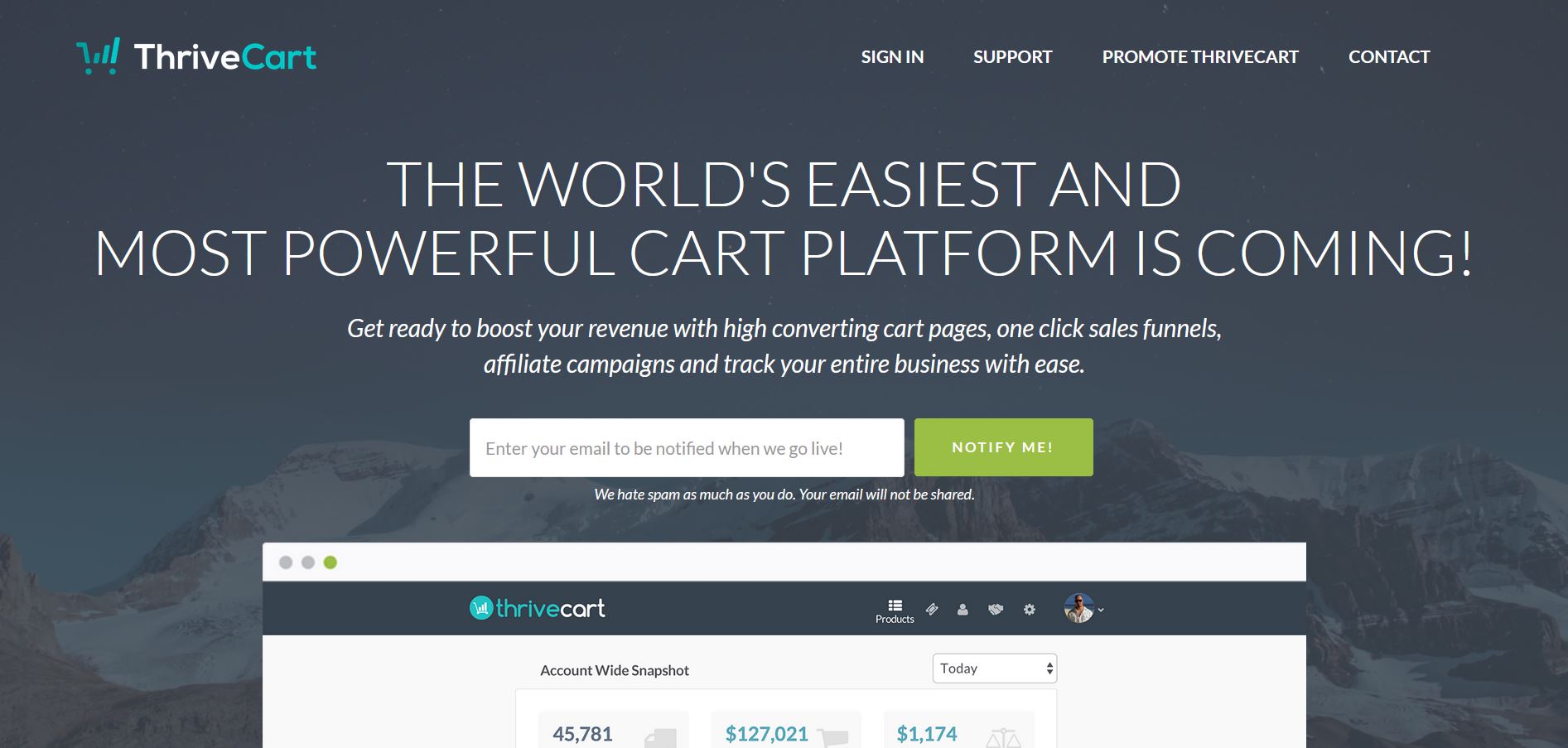
ThriveCart handles the final stage of the sales funnel: the checkout. Whether you sell digital products, physical goods, or subscriptions, it makes building a polished checkout page straightforward. Its feature set goes well beyond simply taking payments, giving you the tools to boost conversions and grow each order.
For example, ThriveCart lets you upsell customers with a single click. At checkout, buyers can add extra products or services at a specially discounted price just by ticking a box. By making it easy and tempting to spend a little more, you can meaningfully lift overall revenue through small upsells applied across a large number of orders.
Because ThriveCart focuses on the checkout, you will pair it with other tools to manage the earlier stages of your funnel. Thanks to its extensive list of integrations, though, slotting it into an existing setup is rarely a problem.
Key features of ThriveCart
- Focused on the final stage of the funnel: the checkout
- Supports both standalone cart pages on your own domain and embedded carts
- Built-in funnel builder
- Native A/B split testing
- Extensive integrations, including autoresponders and other funnel tools
- Available for a one-time cost rather than a recurring subscription
- One of the best options for WordPress sites
Pros
- One-time pricing
- Easy to set up
- High-converting checkout pages
- Works for both physical and digital products
- Multiple payment processors
Cons
- Could use more templates
- Interface feels a little dated
- Some users report translation issues
5. GetResponse
With competitive pricing and a genuinely robust feature set, GetResponse is an excellent tool to have on your side. Landing pages are one of the most important parts of any conversion funnel, and GetResponse offers a range of templates as well as the ability to design your own from scratch.
It is one of the best newsletter tools available, but it can optimize every stage of your funnel. Once you have attracted traffic, GetResponse gives you everything you need to convert those visitors into paying customers, and its landing page editor makes building the ideal page about as simple as it gets.
Beyond its integrations, GetResponse offers advanced automation. The workflow builder can automate everything from sending emails to tagging contacts and tracking sales. Its standout feature is the automated sales funnel generator, available even on the entry-level plan, which gives you a simple way to start assembling your funnel.
Key features of GetResponse
- Effective automated sales funnel generator
- Build your own landing pages or start from built-in templates
- Fully automate your email marketing
- Integrations with a wide range of e-commerce platforms
- Abandoned-order recovery to win back customers you would otherwise lose
- Very easy to set up
- Intuitive navigation for finding the tools you need
- Review conversion rates at every stage of your funnel
Pros
- Very competitive pricing tiers
- Simple API integration
- Connect forms, emails, and landing pages in one place
- Building complex campaigns is straightforward
Cons
- Interface not quite as intuitive as some rivals
- No permanently free plan
- Some users report accounts being closed without warning
To learn more about us, visit our about page.
FAQs about sales funnel software
What is a funnel builder?
Sales funnel builder software automates the process of guiding potential customers through everything they need to learn before they become a customer or client.
What is the best sales funnel software?
That is exactly why this page exists. We keep it updated to reflect the best-performing software on the market and make sure it includes the latest innovations in the industry.
What does "sales funnel" actually mean?
A sales funnel (also called a revenue funnel or sales process) is the buying journey a business guides potential customers through when they purchase a product or service. It can also describe the process by which a company finds, qualifies, and sells to buyers.
Why do you need a sales funnel?
A sales funnel clearly guides a potential customer through any questions or objections they need to resolve before they are ready to buy. Optimizing that process typically leads to higher revenue: a well-built funnel turns visitors into email subscribers, and subscribers into paying customers or clients.