Every successful web presence begins with a website, and every website begins with a domain name. Without one, people have no address to type into their browser to find you. Registering that name is the first practical step in getting online, whether you are launching a business in Australia or building a personal project.
Behind the scenes, domain administrators keep a log of every domain registered under the top-level domains (TLDs) they oversee. Different registries manage different extensions: Verisign administers the records for .com domains, while other companies handle .biz, .org, and the country-specific extensions such as .com.au. A registrar is the company you actually buy through, and it talks to the correct registry on your behalf.
In the early days of the web, some people registered single-word domains for themselves or for companies, which later triggered disputes over ownership based on existing trademarks. Some claims succeeded and others did not. Even musicians have faced challenges: the British singer Sting once lost an arbitration case because his chosen persona was judged too generic to protect.
Beyond branding, a proper domain also lets you send and receive email from your own address rather than a generic Gmail account, which looks far more professional when you are conducting business. Registering through a reputable service handles the paperwork with the relevant registry, and once the registration clears you can confirm it a few hours later with a WHOIS lookup.
Our Top Picks for the Best Domain Registrars
To decide which registrar is genuinely the best, we weighed several criteria and worked out which features matter and which are mostly noise. Hundreds of registrars compete for a slice of the market, especially those lucrative annual renewals, so we narrowed the field down to a Top 5.
Price matters, but it is not the only thing. A registrar that makes managing or reconfiguring a domain unnecessarily complicated costs you time, which lowers its appeal. Reputation, extra services, technical support, and the ease of searching for and managing names all factor in as well.
Reputation deserves special mention. A registrar that folds because of financial trouble can leave you struggling to move a domain elsewhere, reconfigure it for a new host, or renew it before it lapses. Sticking with established players rather than fly-by-night operators offering dirt-cheap pricing for a few months is the safer path, particularly for a business venture where you cannot afford undue risk. ICANN can sometimes step in to fix problems, but there are no guarantees. The simplest way to avoid the headache is to choose a tried-and-true registrar from the start.
Namecheap.com — Best Overall
Key Features
- Clear, transparent pricing
- Free domain transfers
- Integration options
- SSL certificates available
- Free domain privacy
- Bulk domain search for up to 50 names at once
Pros
- Free privacy protection on registrations
- Affordable registration prices
- Live chat available
Cons
- Not everyone loves the website design
- The in-dashboard messaging can be awkward to display
Namecheap Review
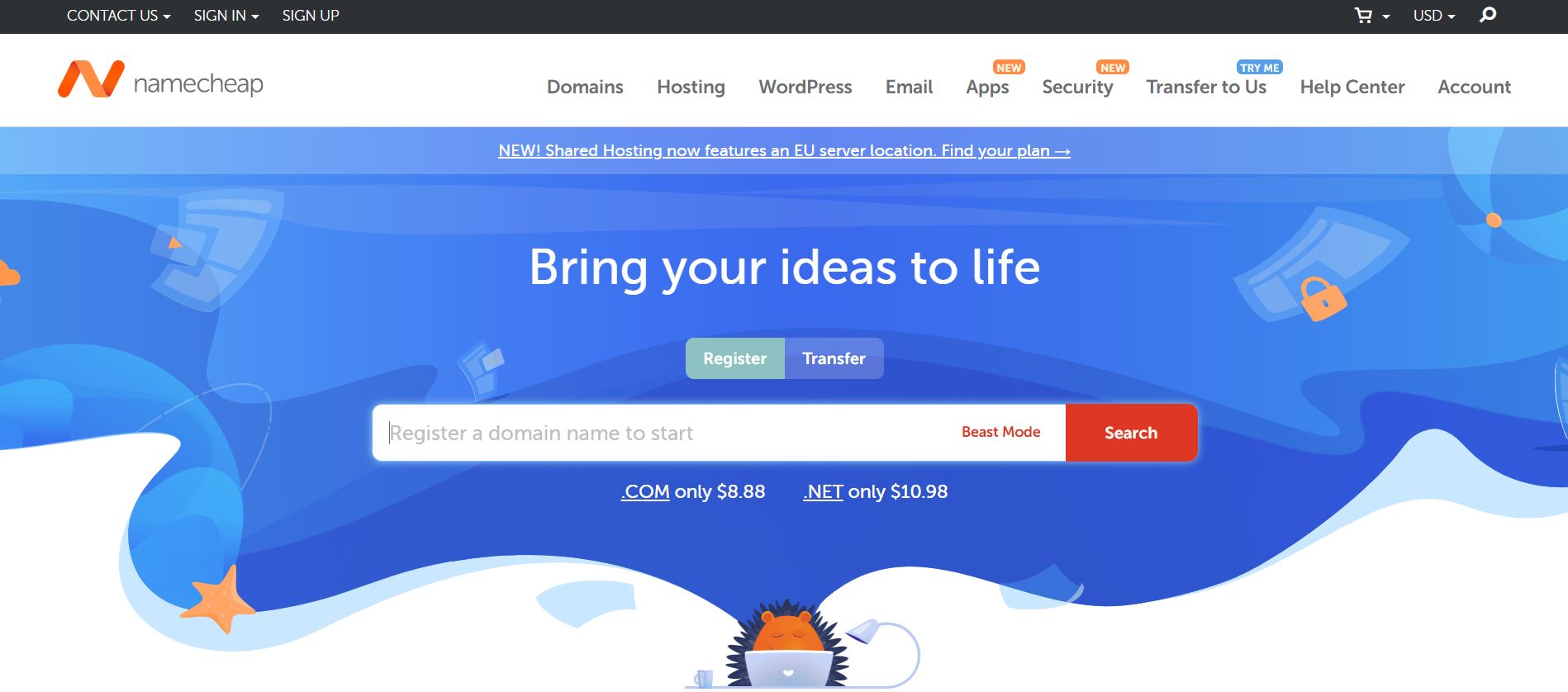
Our top pick is Namecheap.
Free privacy protection with every mainstream registration is a major draw. Namecheap was one of the first registrars to include it at no cost, back when privacy was a paid add-on that noticeably inflated the price. That saves buyers $10 or more per domain each year. It applies to TLDs and several other types, though a handful of domains do not permit private registration or are administered differently. At a minimum it works for .com, .org, and .net.
Customer service and technical support are both excellent. The front-line team quickly escalates complex cases, such as tricky domain name server (DNS) configurations, to the technical team, who are adept at diagnosing why a site is not resolving because of misconfigured DNS records.
The site itself is quick and easy to use. Its one quirk is the messages menu in the top-right corner of the dashboard, where the dropdown can be fiddly to keep open long enough to click. It needs a tweak, but otherwise the dashboard works flawlessly.
Premium add-ons you can usually skip
- Gmail add-on (a few dollars per user)
- Private email (free for the first couple of months, then a modest annual fee)
- Shared hosting (low monthly rate)
- EasyWP managed WordPress hosting (entry-level monthly pricing)
Cost: Domain prices move around, but Namecheap's .com registrations remain among the most affordable, with a small ICANN fee added on. Renewals cost a little more than the first year, which is standard across the industry. The registrar also runs periodic promotions on alternative extensions such as .press, .io, and .tech.
Domain.com — Best Affordable
Key Features
- Private domain registrations
- Premium domains and access to brokered options
- Bulk domain registration
- SSL certificates
- Web hosting
- eCommerce options
Pros
- Access to a long list of ccTLD country codes beyond Australia and the US
- Plenty of free tools to explore
- A website builder for each domain registered
Cons
- Pricier than many other registrars
- Only longer-term commitments unlock the best discounts
- Upsells are common
Domain.com Review
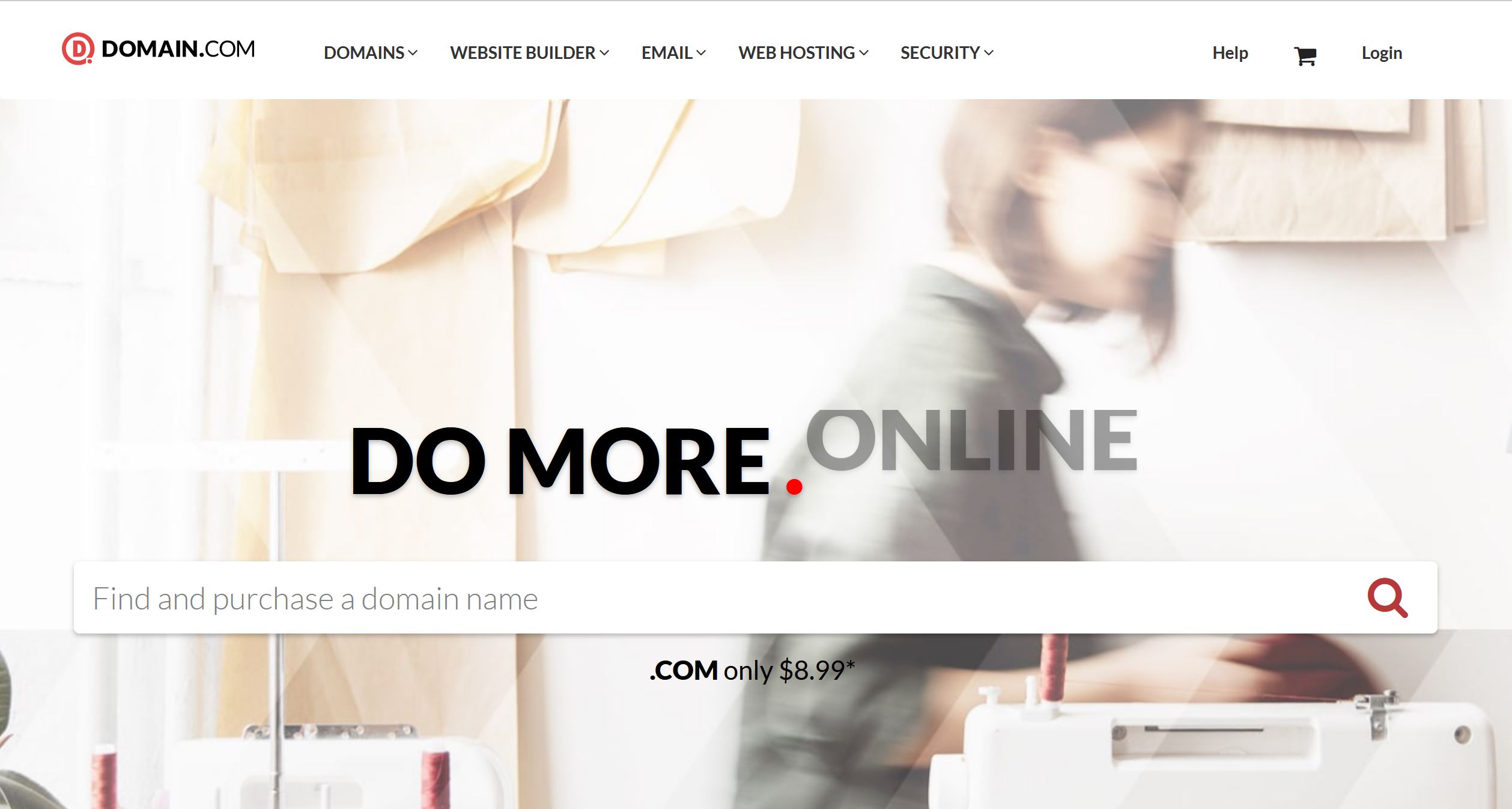
Domain.com rates highly on many lists because its feature set is strong and it bundles hosting, including WordPress sites.
For people new to building a site, it can be a genuine one-stop shop for a domain and hosting together, which avoids the more involved route of registering a domain in one place and pointing its DNS at a separate host.
The registrar has been around for more than two decades, so there is no worry about it vanishing overnight. Registrations are handled professionally, with plenty of extras on offer.
Search tools cover bulk searches, premium domain searches, and auction domains available through brokers. You also get DNS management plus hosting with generous disk space and marketing tools to help promote your site.
Cost: .com domains sit in the standard range for the first year, with a slightly higher renewal. Privacy protection is not free here and adds a yearly charge per domain, which is a deal-breaker for some who prefer registrars like Namecheap that include it. Discounts and coupons do appear from time to time, often bundled with new hosting accounts.
Bluehost.com — Best for WordPress
Key Features
- Easy to use
- Privacy features and solid security
- Email support tickets
- Live support 24/7
- SSL certificates available
- Hosting plans include a free TLD domain
- Extensive knowledge base
Pros
- One of the largest web hosts
- Free TLD domain with a hosting account
- Officially partnered with WordPress
- Decades of experience
- Customer support across multiple channels, 24/7
Cons
- Primarily a web host, not a dedicated registrar
- Part of a larger corporation that owns many hosting brands
Bluehost Review
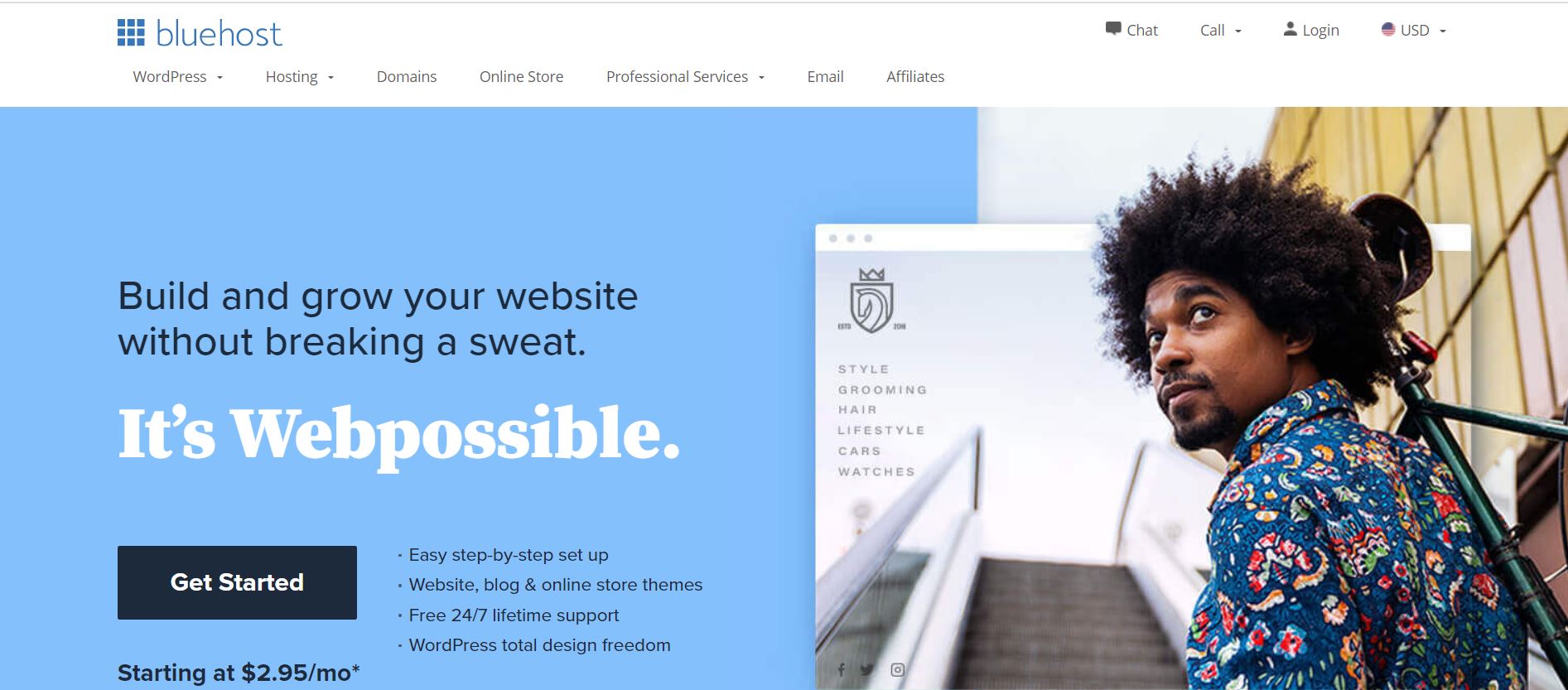
Bluehost is one of the best-known web hosts, thanks to heavy affiliate promotion. It is less famous as a registrar, since that is more of a side line. What makes it worth mentioning is the free TLD included with each new hosting account, which saves money when you need both a domain and hosting to get a site online.
Because of its scale, Bluehost offers 24/7 support across live chat, ticketing, phone, and even social media. If you prefer to solve problems yourself, its knowledge base is extensive.
For anyone launching a starter site with modest traffic, Bluehost can supply discounted first-year hosting alongside a free domain.
Cost: Buying a standalone .com domain without hosting sits at a typical market rate, and privacy protection is available for a token annual fee.
Domains by Google — Best Google Integration
Key Features
- Affordable domains
- Free privacy registrations
- Custom email via Google Workspace (formerly G Suite)
- Email forwarding options
- Sub-domain management
- Optional access to website builders
- Support via live chat, email, and phone (24/7)
Pros
- Backed by one of the biggest names on the internet
- Tight integration with Google products and services
- Clean, simple interface
Cons
- Not the cheapest option
- Google has since transitioned this service, so availability has shifted over time
- Some foreign ccTLDs and alternative extensions do not allow private registration
Domains by Google Review
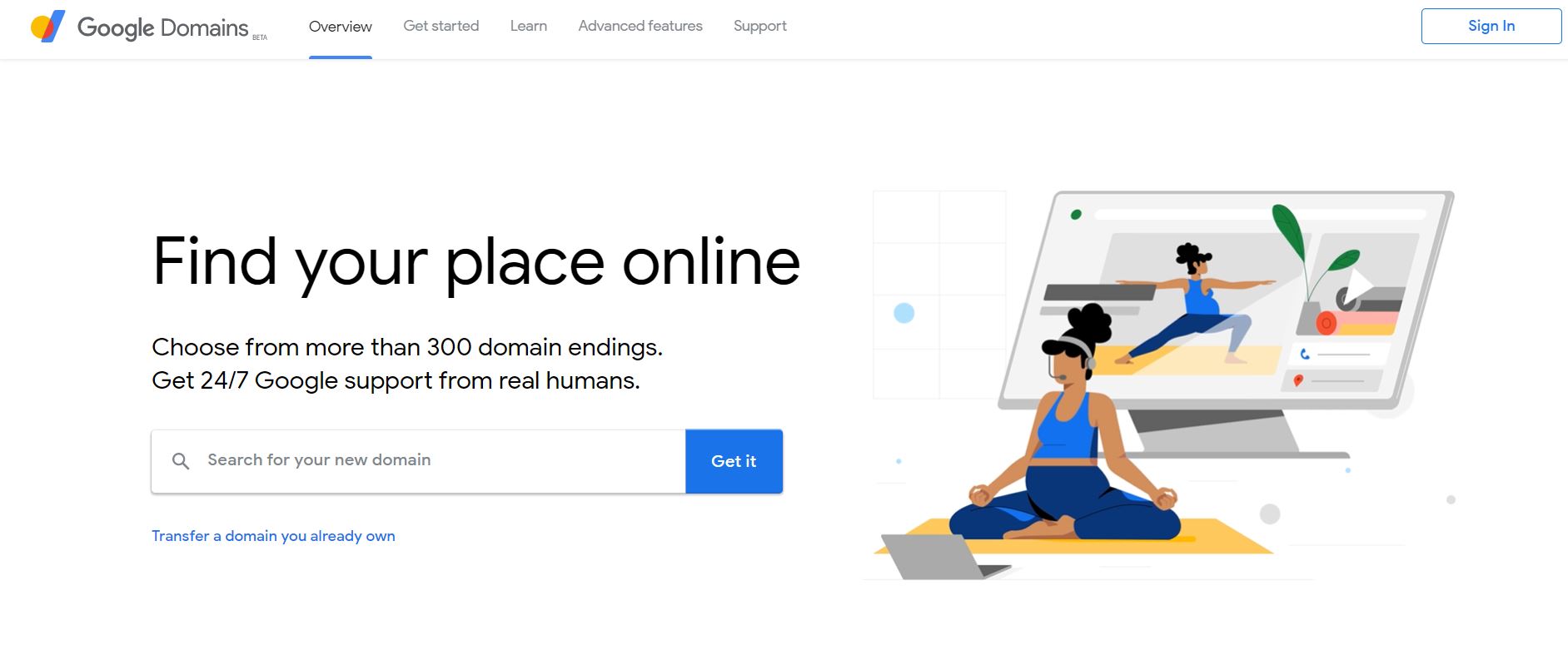
Google's domain registration service leans on the company's reputation for simplicity. For many buyers, being with Google is a plus; the perception is that a domain registered here might get noticed sooner, though there are no guarantees when it comes to search ranking.
The real appeal is smooth access to Google products and support, including Google Workspace. On pricing it is not the cheapest, but free privacy protection sweetens the deal, and there is refreshingly little upselling. If you like Google's minimalist design language, the interface will feel immediately familiar and easy to learn.
Cost: Domains are competitively priced with automatic renewals included, and email alerts warn you before a domain is about to expire so you do not lose it while distracted. Developer-focused extensions such as .dev are available at similar rates.
Register.com — Best Reliability
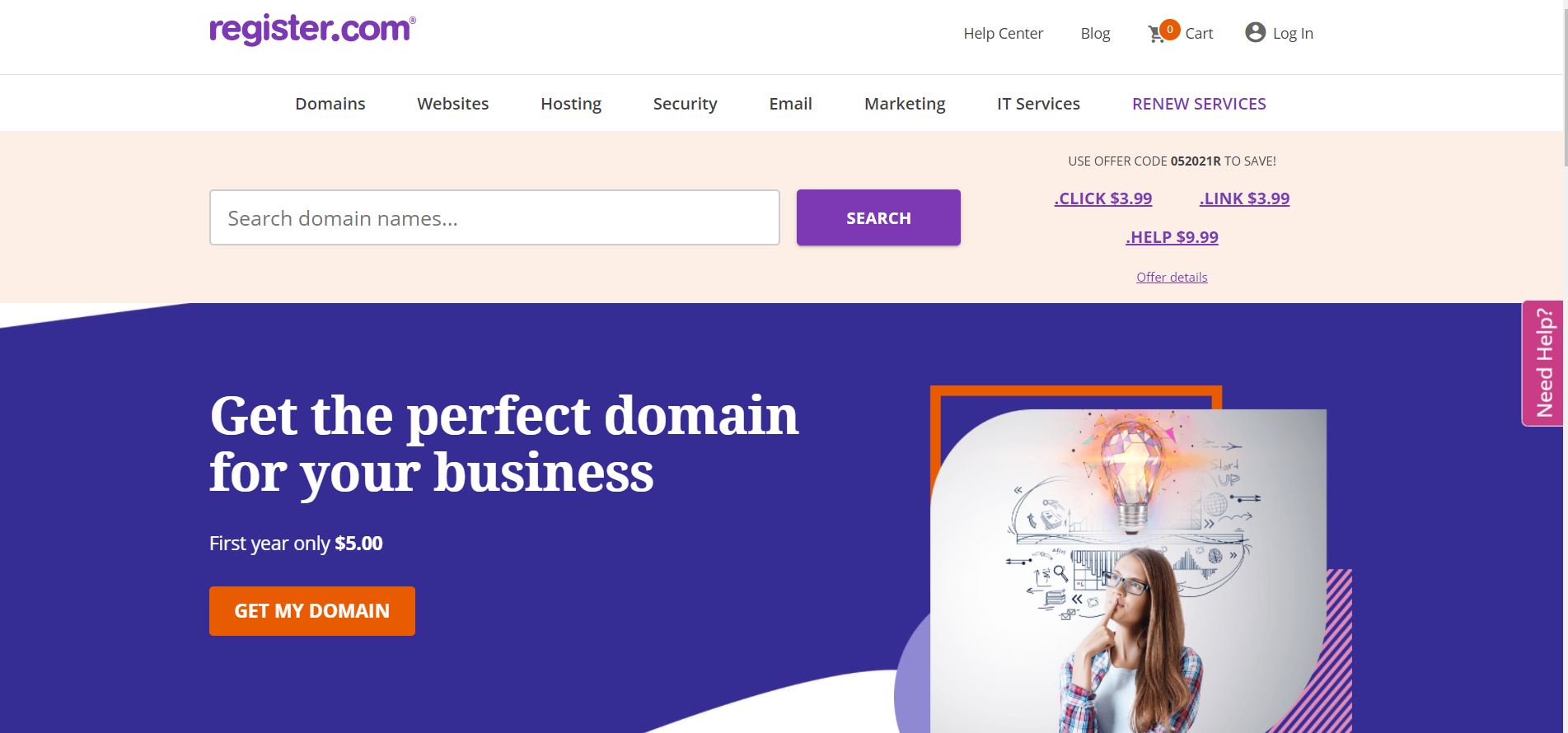
Key Features
- Strong domain registration and WHOIS lookup
- Easy domain transfers
- Solid email services
- Website builders and eCommerce options
- Marketing tools and social media access
- SEO facilities
Pros
- Packed with tools that make domain management easier
- Reasonably priced services
- A long-standing, trusted registrar
Cons
- No live chat
- Privacy protection costs extra
- Customer service is not available 24/7
Register.com Review
Register.com launched almost as soon as the commercial internet took off, and trust in the brand follows from that longevity. It is unlikely to disappear on you.
Registration and transfers are straightforward, and there are plenty of extra tools, either free or affordably priced, to help launch a first website. Privacy protection is charged on top of the base registration, so the total can run higher than at some competitors.
Cost: Base domain registrations can be very cheap, but WHOIS privacy adds a meaningful annual charge per domain, which pushes the real total higher, and unusual TLDs can cost more still.
The Three "Rs" of Domain Registration
You will often come across three terms: registry, registrant, and registrar. These are the three Rs of domain registration.
The registry is where a top-level domain and its records are held. The domain extension identifies which registry manages it: Verisign runs all .com domains, for instance, while other registries handle other extensions.
Registries operate under the oversight of the Internet Corporation for Assigned Names and Numbers (ICANN) and the Internet Assigned Numbers Authority (IANA). Fees commonly apply to ICANN when you register or renew a domain.
When you "buy" a domain, the registry is really granting you the right to use it for the registration period. The registrar (Namecheap and the like) notifies the appropriate registry that it will administer the name on your behalf.
So while we tend to think of domains as things we own, what we actually hold is closer to a lease for the registration period. You never technically own it, but for practical purposes it behaves as though you do.
Once a domain expires and passes through the various grace periods, it usually becomes available again. Specialist services exist that try to snap up desirable expiring names the instant they are released.
Best Tips
When registering a domain for a business, consider whether it is worth grabbing alternative extensions such as the .org or .net version too, and whether plural or singular variants are worth securing at the same time.
Some bad actors register similar or misspelled versions of a name to siphon off "type-in" traffic meant for your site, so registering the obvious variants yourself can be a sensible defensive move.
It is harder than ever to register two- or three-word, human-readable domains, since most are already taken. You will need to get creative, or look at premium domains if your budget allows.
Using a respected registrar also protects you from front-running, where a shady operator scoops up a name you just searched for. Big-name registrars keep searches private and do not pre-emptively buy domains their customers look up.
What to Look For in a Domain Registrar
You can either keep domain registration with a specialist registrar and host your site with a separate hosting company, or use a single company for both. There is considerable overlap, and bundling can save money in the short term through domain-plus-hosting deals. Conversely, hosts like Bluehost still bundle a free domain with hosting accounts if you would rather go that way.
Our general preference is to register domains with a registrar that focuses on registration and host with a company that specialises in hosting. It is a personal choice, though, and neither approach is wrong. That said, if you expect to grow into a larger site or run eCommerce, we lean towards keeping domains and hosting separate.
Here are some other factors to weigh:
Terms and Pricing
The first-year price may look great but differ sharply at renewal. Many registrars charge more to renew, so always check. Multi-year registrations sometimes earn a discount, and coupons often apply to first-year registrations but rarely to renewals.
Domain Transfers
Newly registered TLD domains cannot be moved within the first 60 days under ICANN rules. Some transfers are free, but other registrars levy what amounts to an exit fee, which adds up quickly if you have many domains to move.
Expiration
Some registrars auto-renew your domain 30 to 60 days before it lapses; others, like Namecheap, let you choose which domains renew automatically and which do not. Never assume auto-renewal is on. Check the registrar's policy and your account settings after setup.
Additional Services and Features
Most registrars bundle plenty of extras today, either free or as premium options.
What to Watch Out For
Unclear pricing is a red flag. A registration should include only the domain price, the applicable ICANN fee, and any sales tax, nothing more. Premium domains warrant extra care, as they often carry higher prices and unexpected fees, and auction domains can cost far more with additional renewal costs baked in. Hidden fees and forced third-party tie-ins are not normal. Watch, too, for a pattern of customer complaints or negative news about any registrar.
Closing Thoughts
Choosing a domain registrar and registering a name is not as complicated as it first appears. Once you have made your pick, the registration itself takes only a few minutes.
Just remember to pair your domain with a quality web host to keep the site online. Together, they form the backbone of your internet presence.
To read our terms of service, please click here.